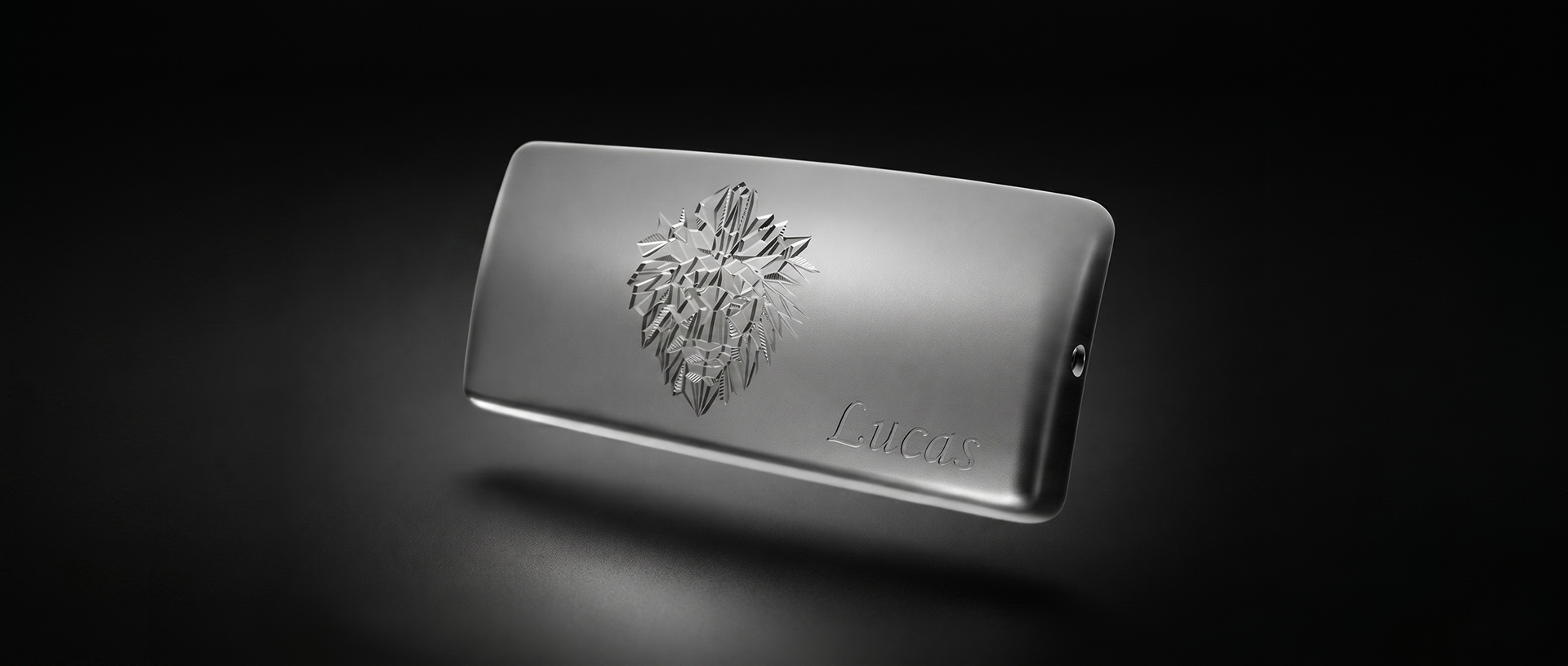
While the design was done by me, AI was incorporated into the rendering process. I believe AI shouldn't replace our work entirely, but it can sharpen ideas and expand creative boundaries.
Aesbrace — 3D Printed Titanium Bracelet
I have always believed that objects speak before we do.
Jewellery, when treated as design rather than decoration, becomes a language of identity. It reflects the values we carry, marks milestones, invites connection, and keeps our stories close to heart. With this in mind, I set out to create a lightweight, refined bracelet that embodies both material precision and personal meaning.
Design Inspiration
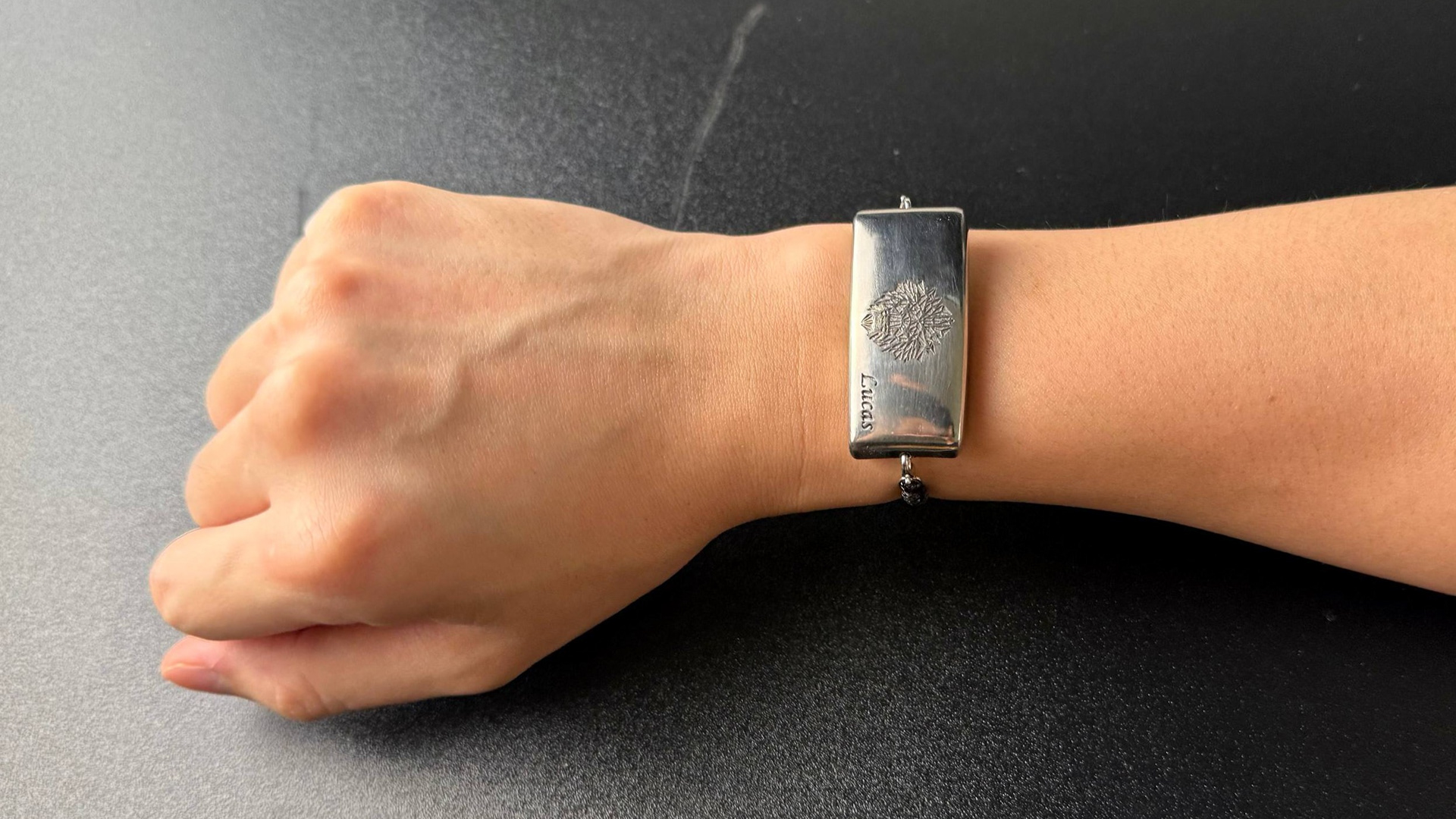
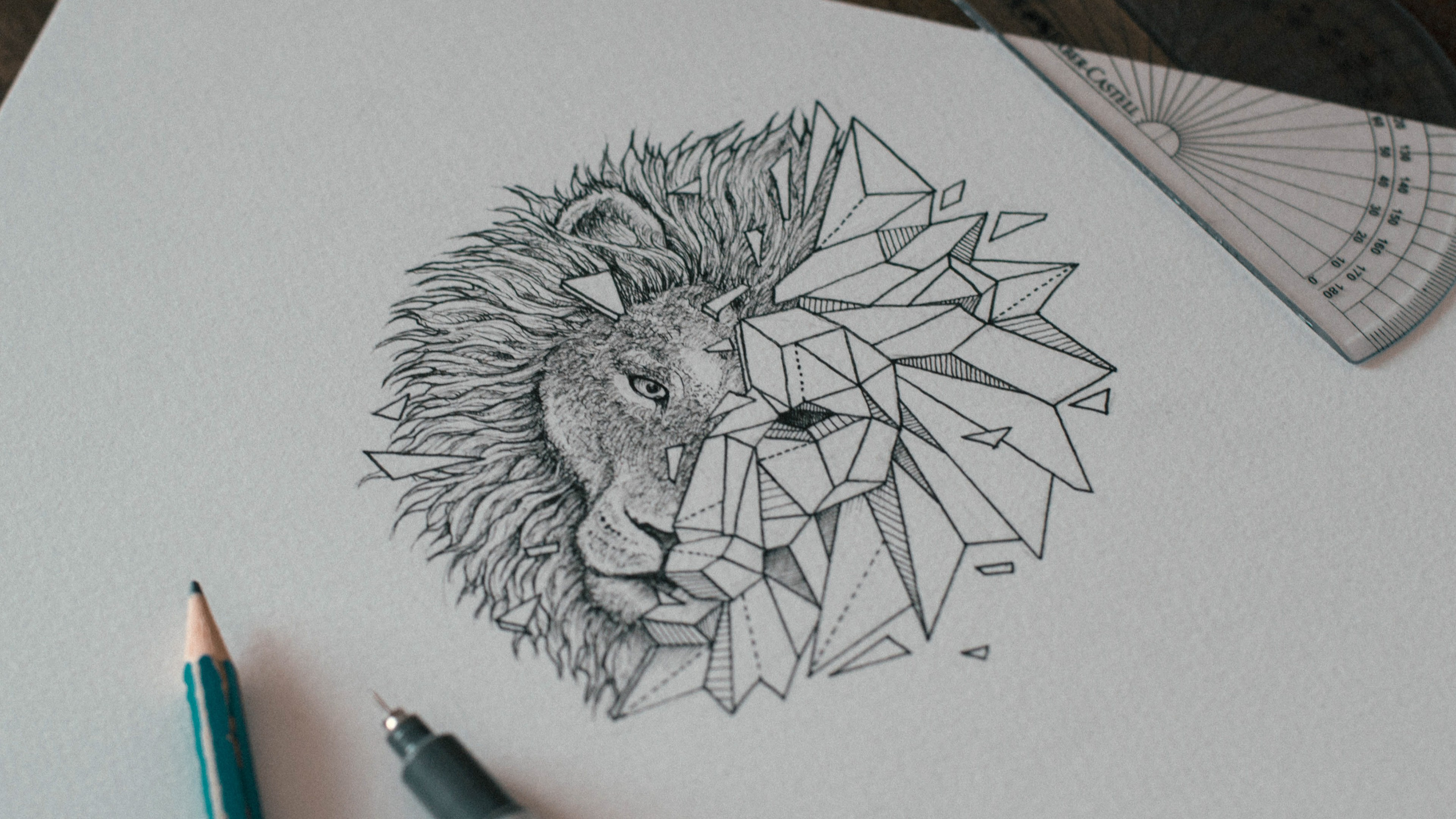
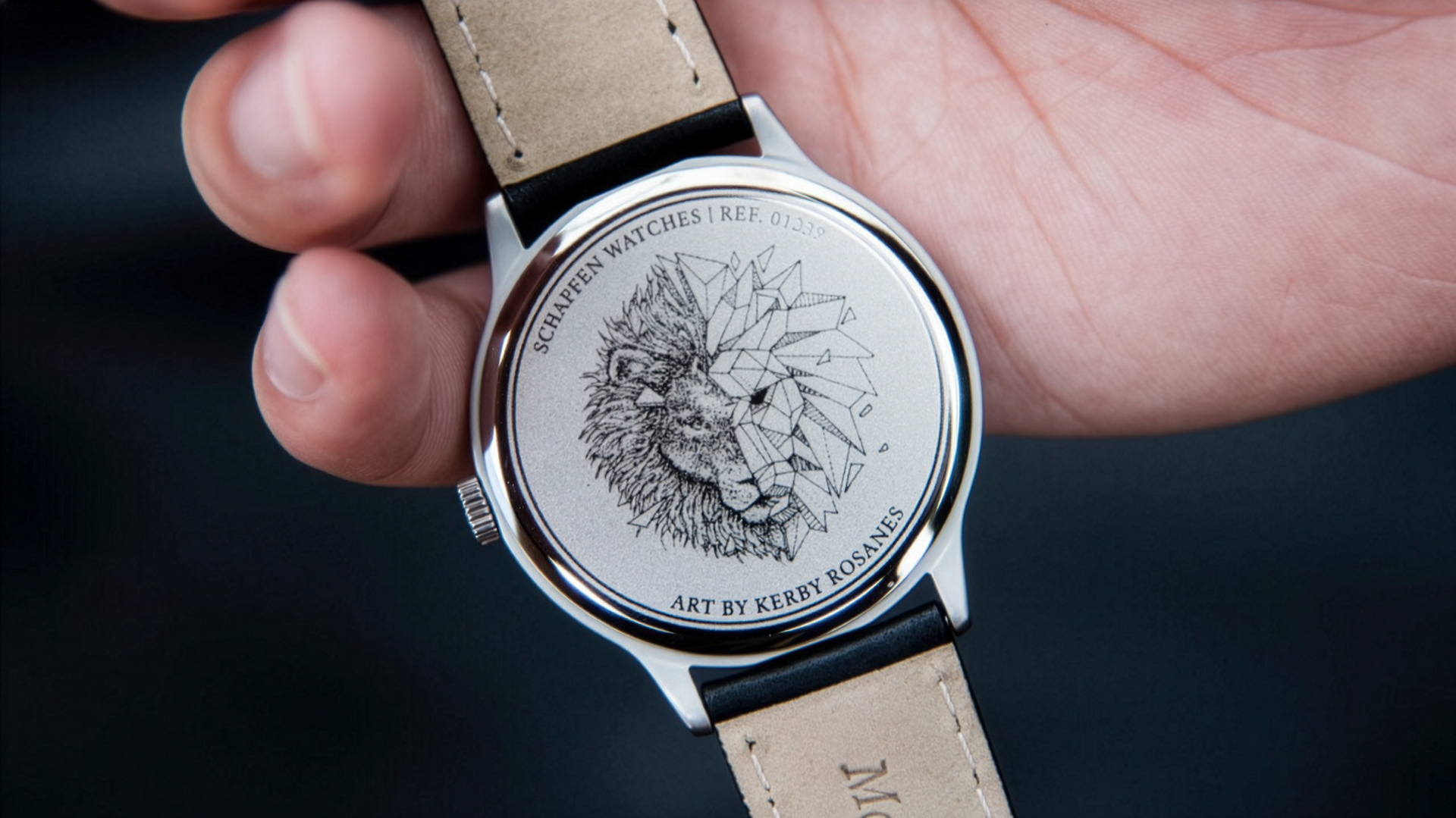
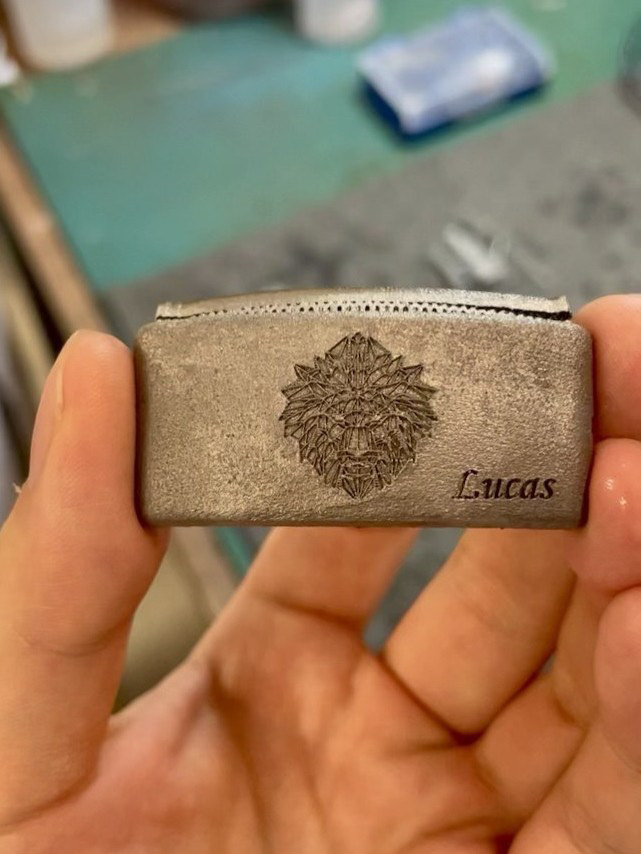
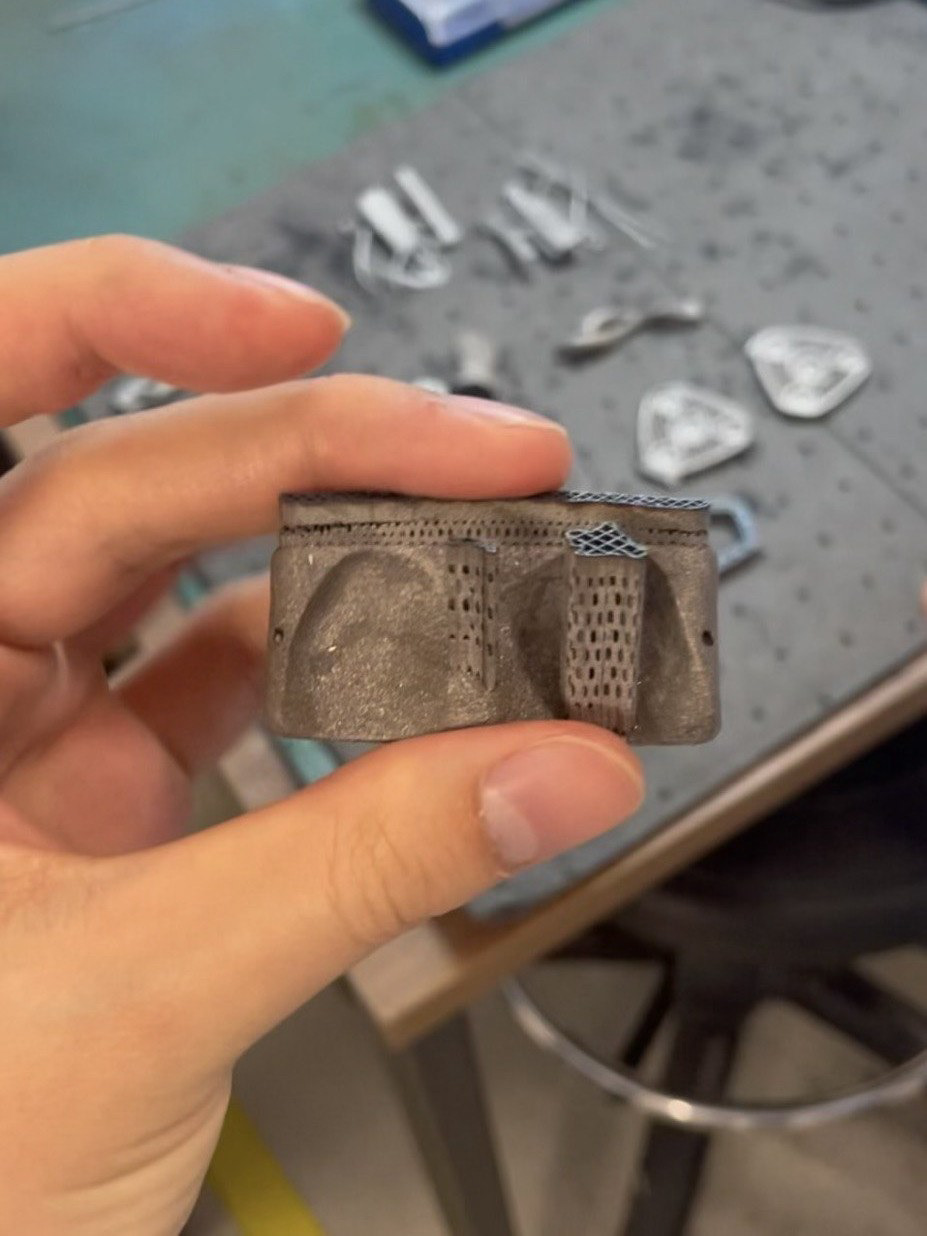
Every design begins with inspiration. For this bracelet, it was the intricate linework of Kerby Rosanes, whose Geometric Beasts lion became the engraving that defined the piece. His intricate style inspired me to explore how fine detail can challenge the limits of Laser Powder Bed Fusion metal printing, a quality I sought to capture in this piece. On the back of the bracelet, I embedded an impression of my fist. This subtle detail symbolises the resilience and spirit shaped by over a decade of combat sports training, serving as a quiet reminder of that strength during difficult times.
Check out Kerby Rosanes designs: https://kerbyrosanes.com/
The Making of Aesbrace: From Powder to Bracelet
Aesbrace was an engineering exercise in metal additive manufacturing, and at the same time, a way for me to craft a piece of jewellery of my own. I started by modelling the bracelet in Fusion 360 and printing several plastic prototypes on my Bambu P1S to fine‑tune the size and fit for my wrist. To personalise the piece, I carved my name and an impression of my fist onto the bracelet using a 3D digital modelling process.
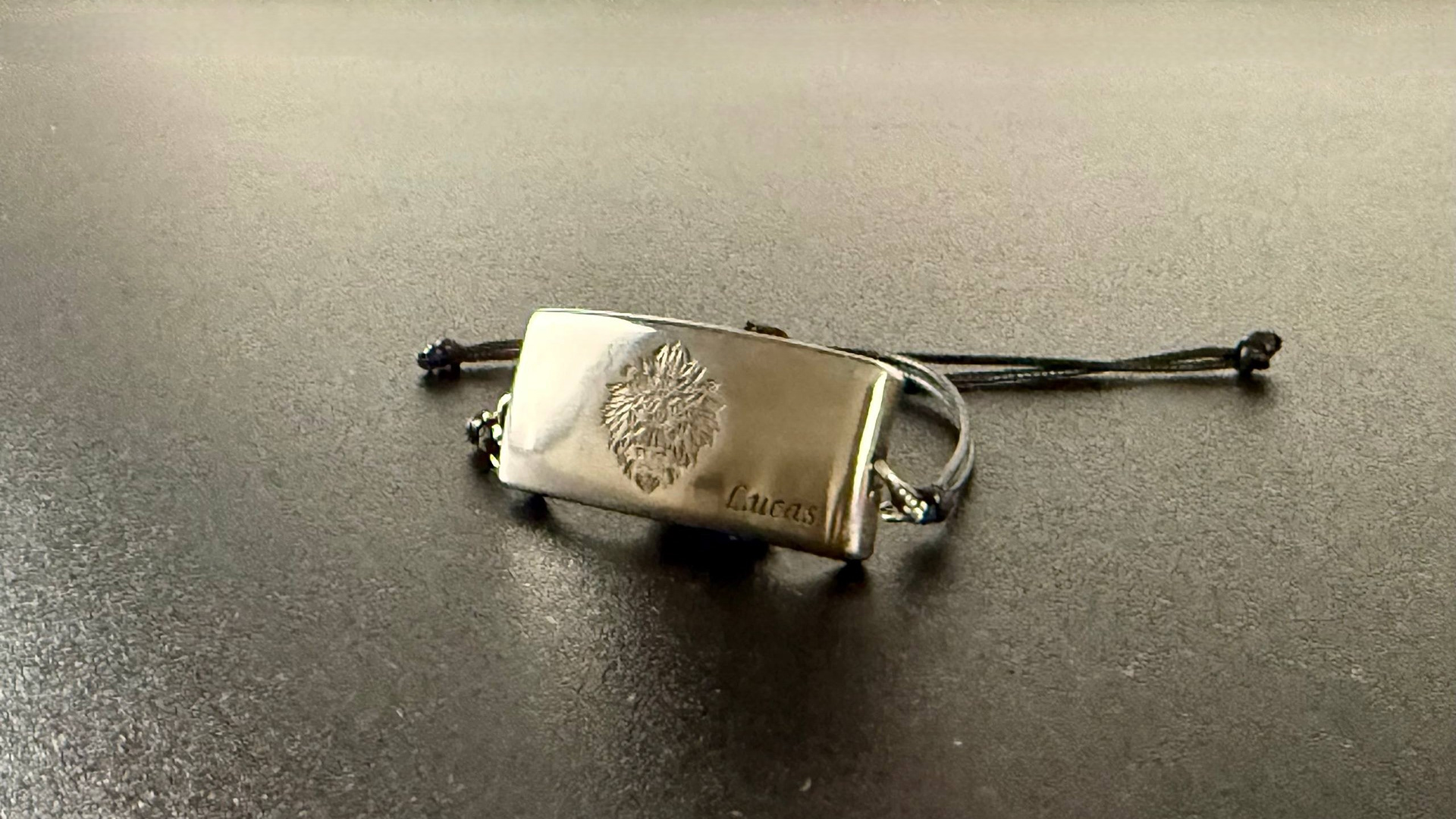
Two small side holes were added to the bracelet so the bracelet could be threaded with a cord. They were designed to be thin enough to make hooking or threading easy, yet small enough to be printed in metal without needing supports. I refined the 3D model in Autodesk Meshmixer, smoothing out sharp edges to make the bracelet more comfortable to wear.
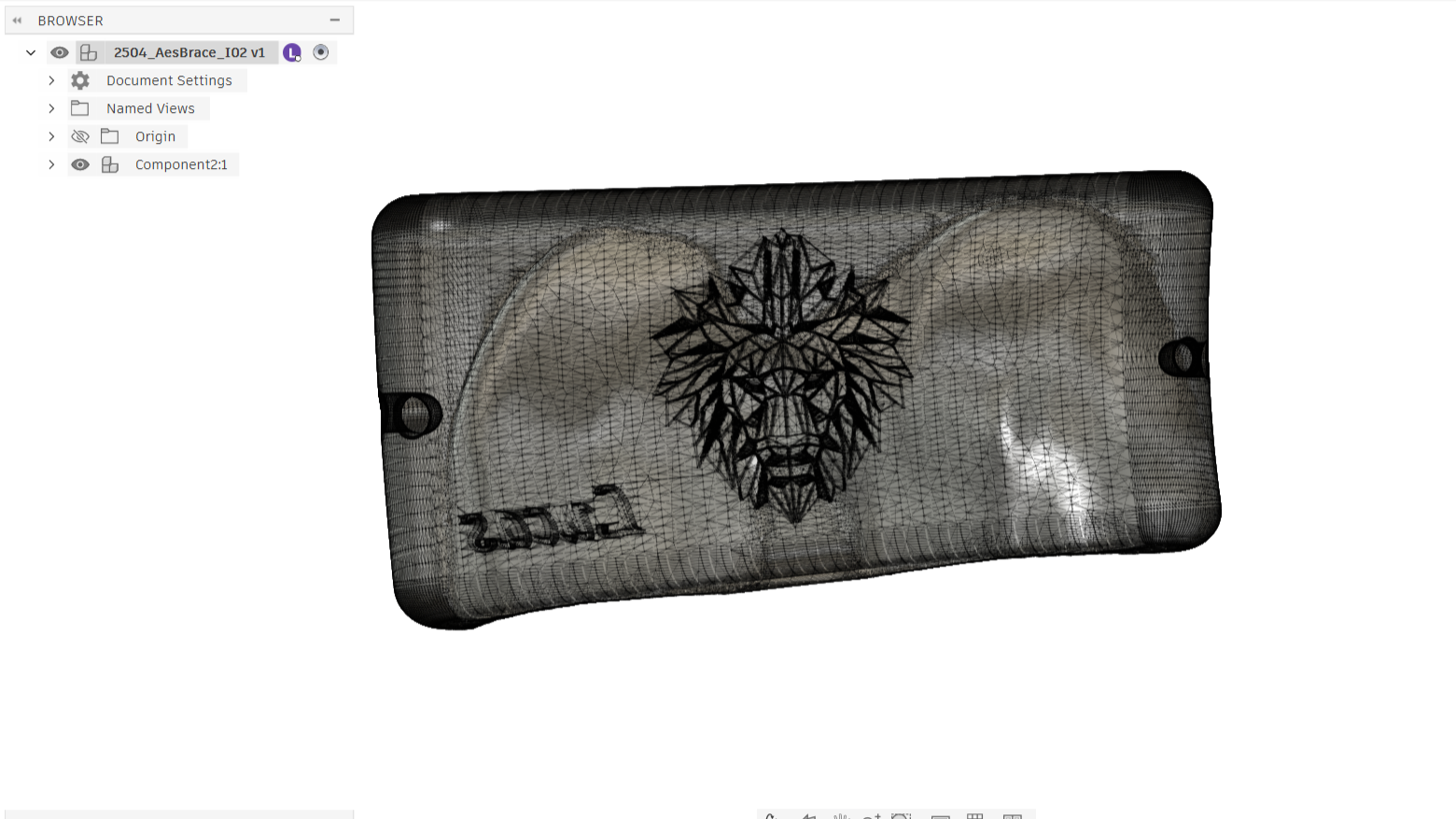
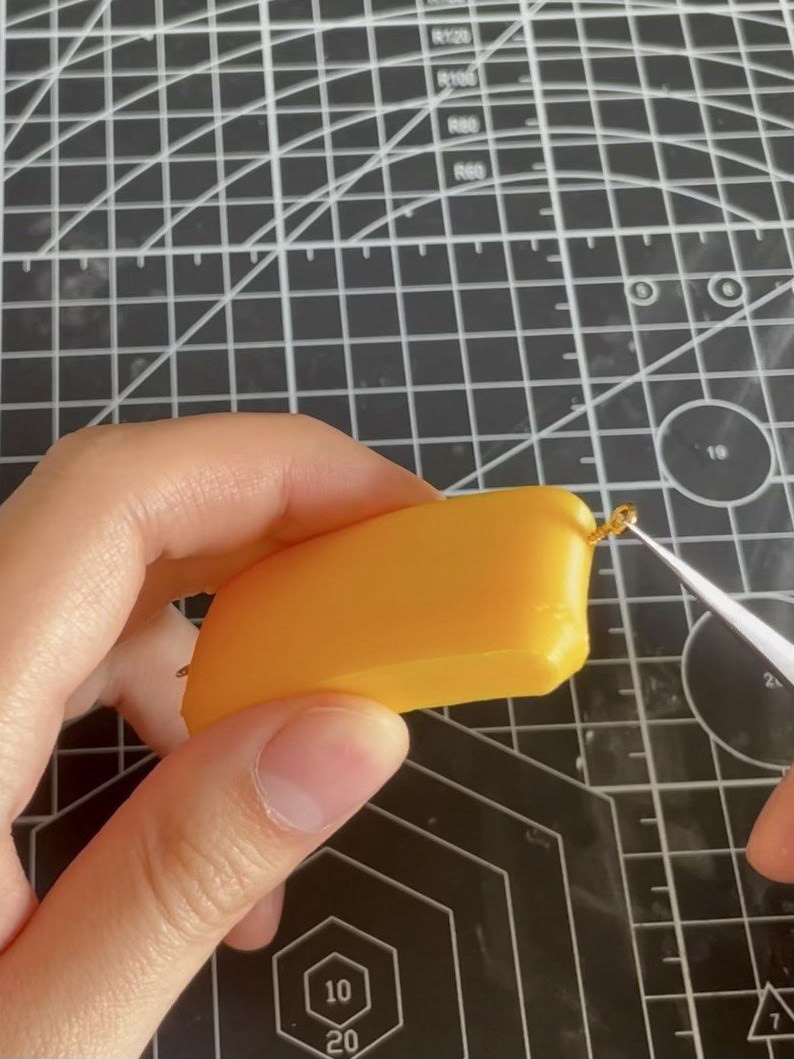
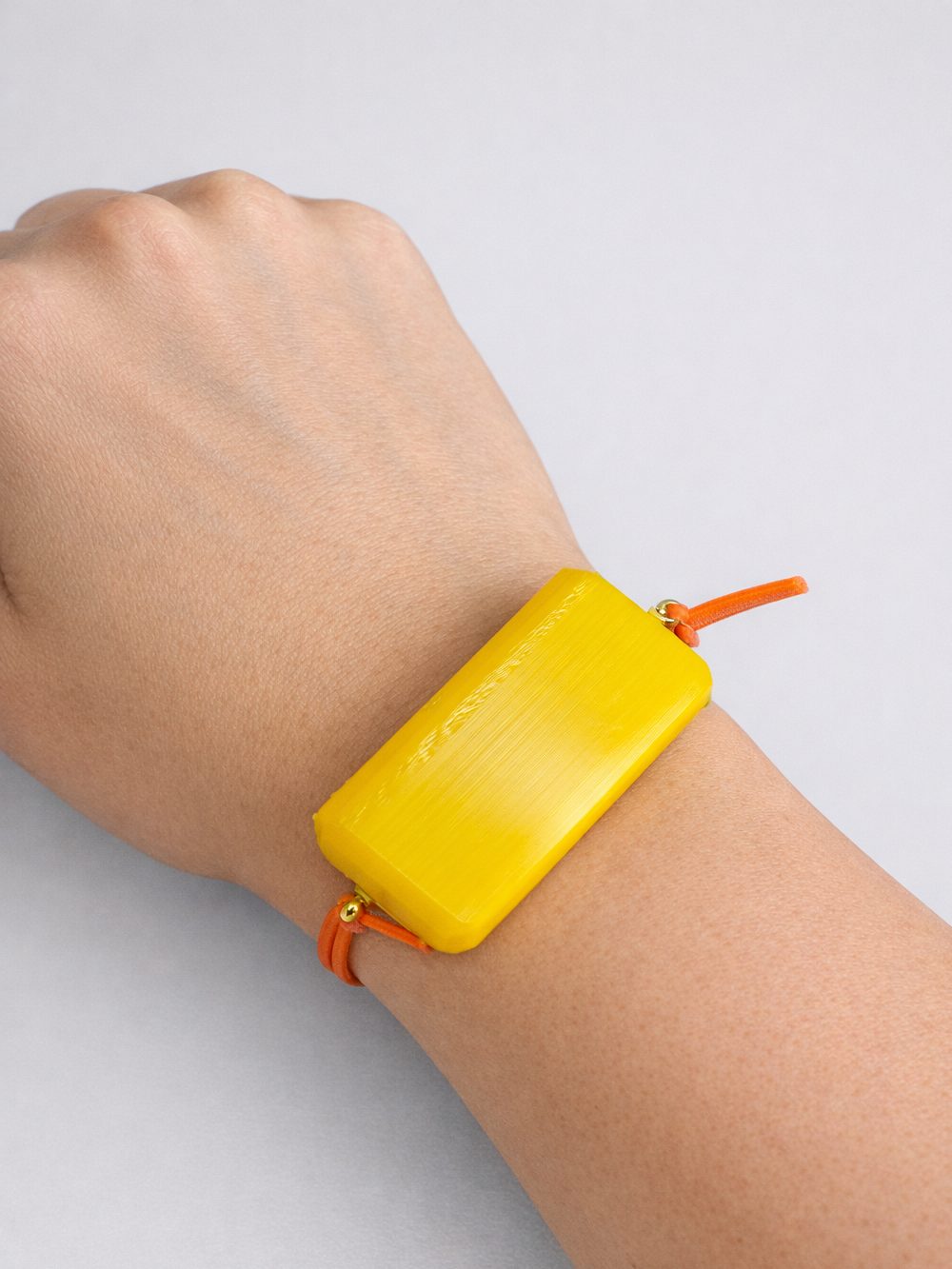
After testing plastic prototypes, I finalised the design and prepared it for titanium printing on the EOS M290. Using EOSPRINT, I set the orientation and generated supports to ensure strength, surface quality, and accuracy. Titanium was chosen for its strength, lightweight nature, and corrosion-resistance, qualities so reliable that it is even used in aerospace.
Metal 3D Printing — Laser Powder Bed Fusion
The process began with a digital model prepared for selective laser melting on the EOS M290 Metal Printer. Metal 3D printing works by spreading thin layers of titanium powder and fusing them with a high‑power laser to form solid geometry. Layer by layer, the build produces dense, high‑strength parts with precise detail and minimal waste.
Metal 3D Printing Demo — Credits: RandomRapture
Unveiling the Printed Bracelet
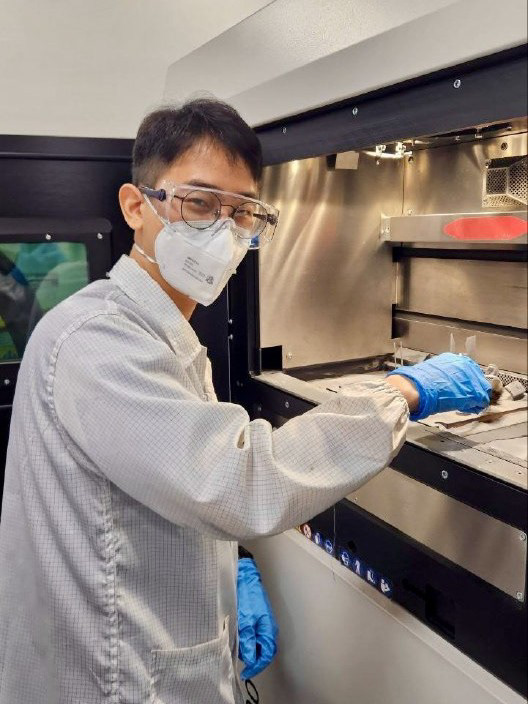
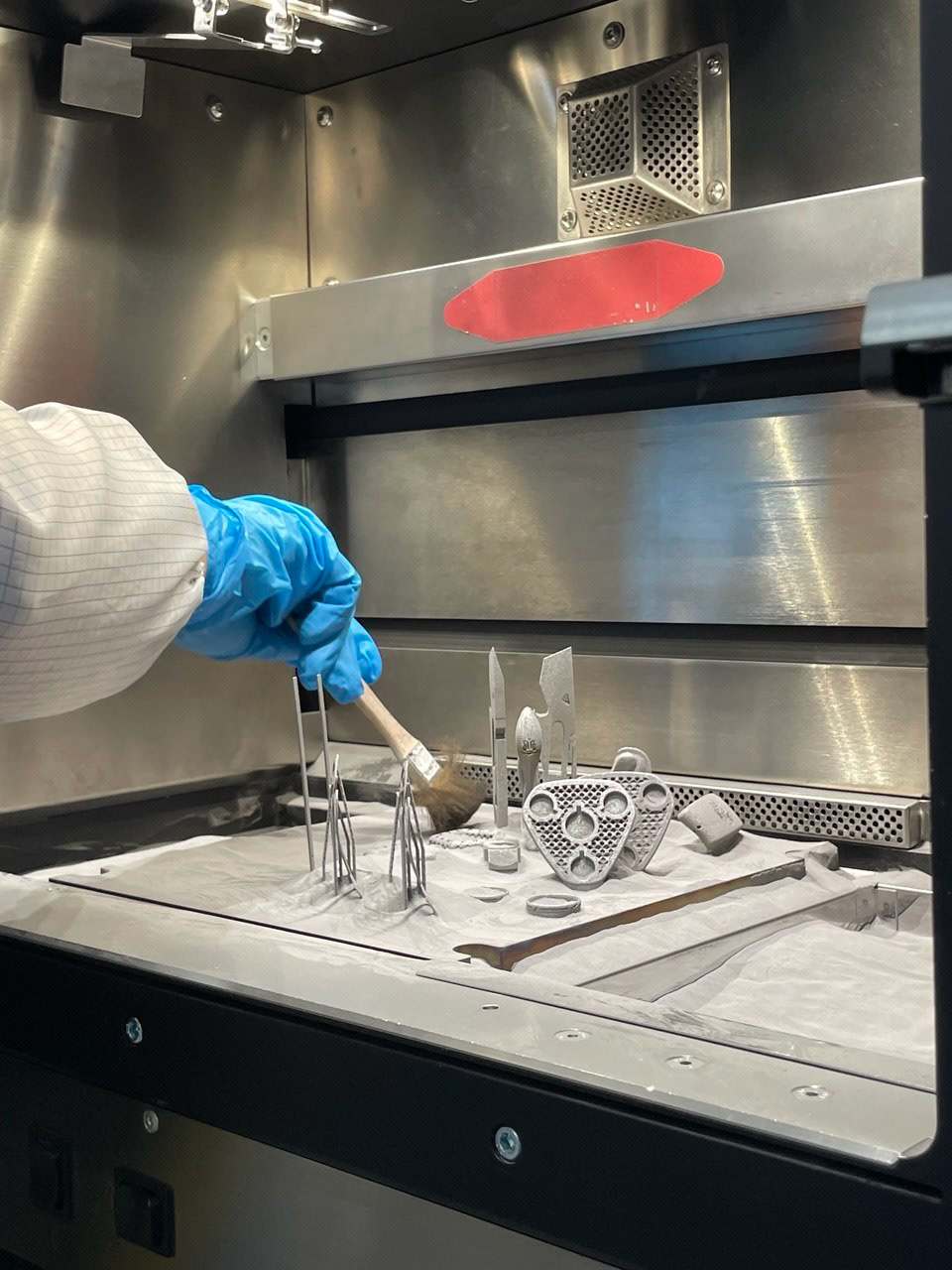
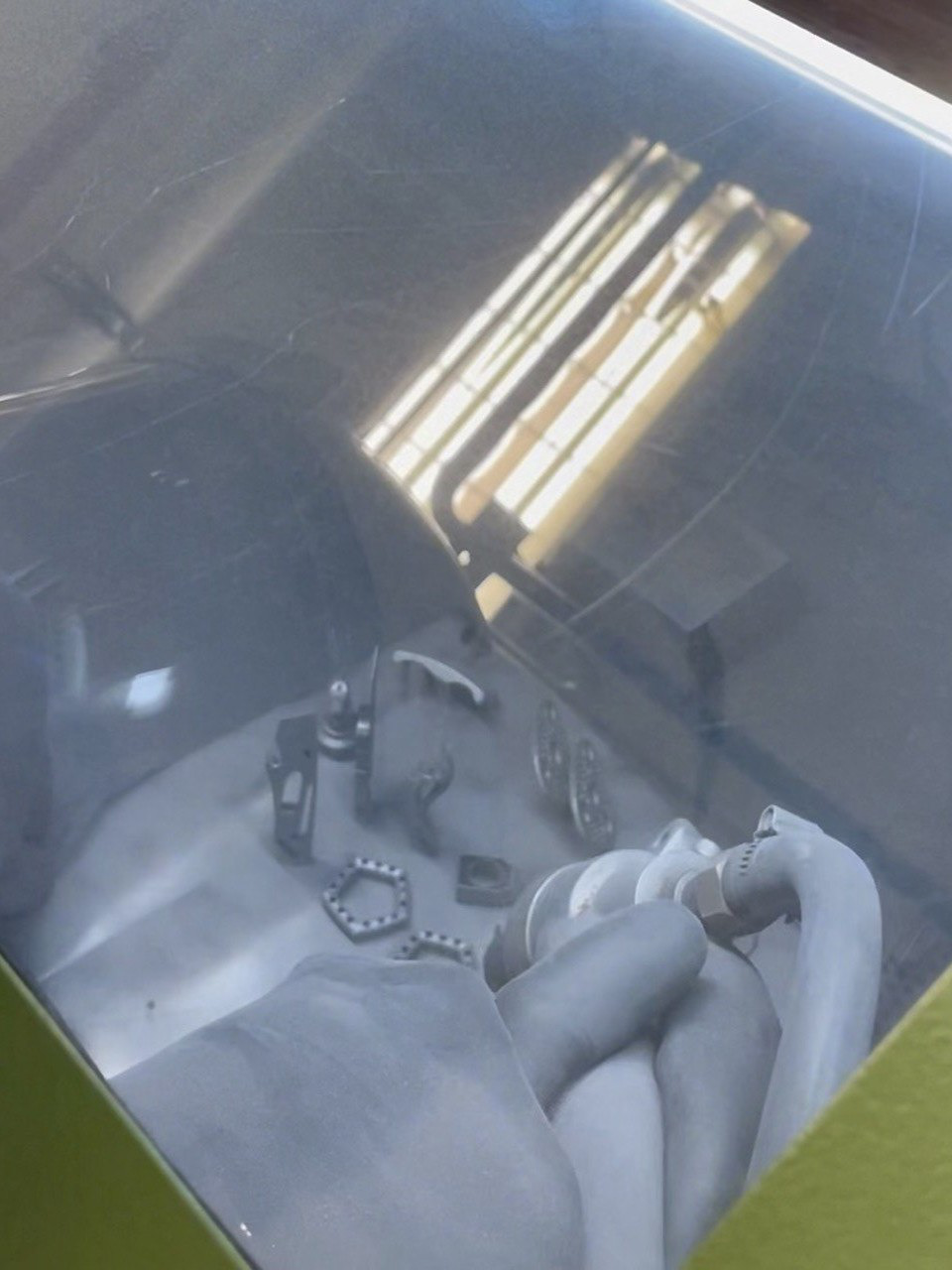
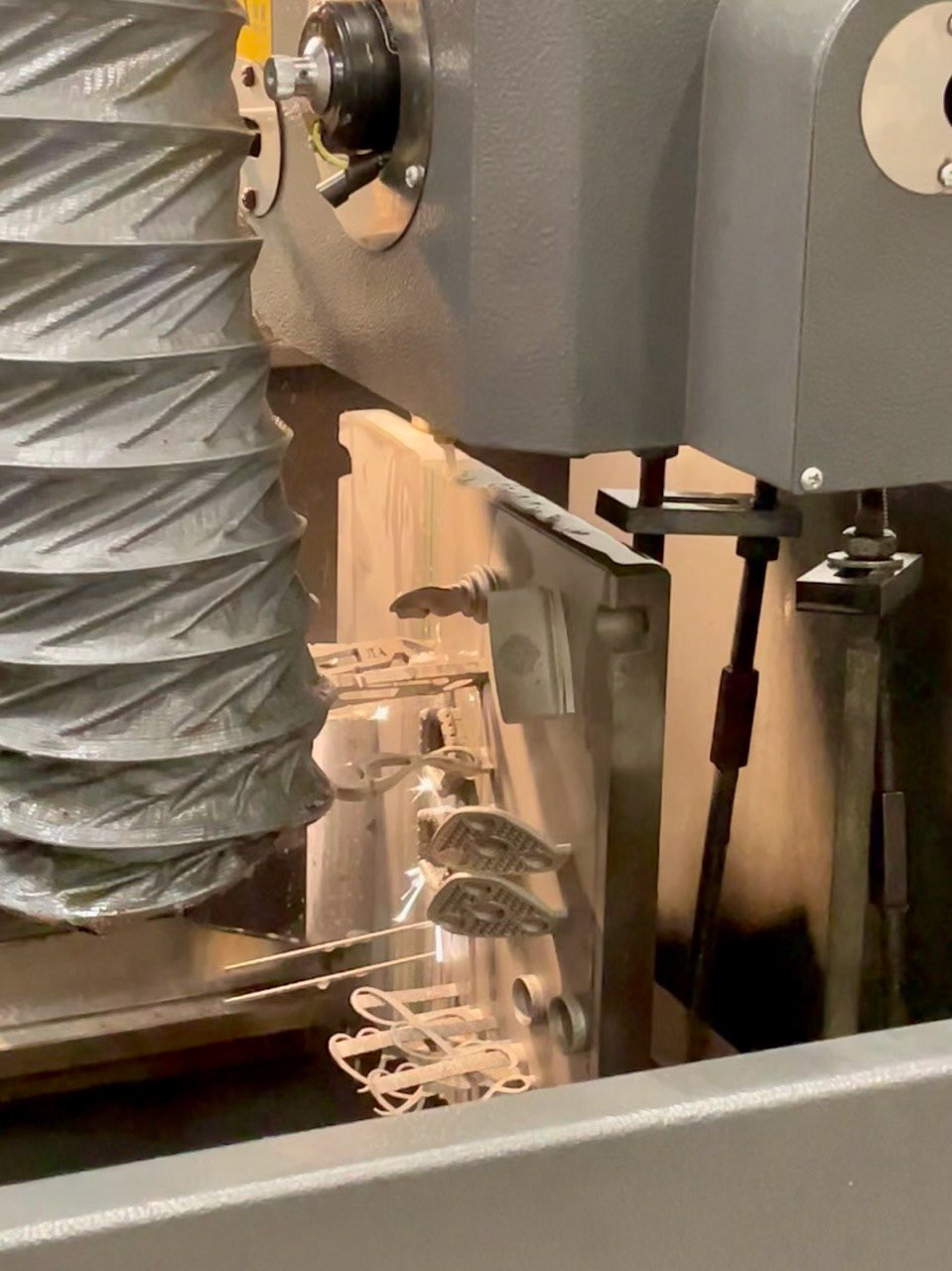
Once the print was complete, I uncovered the bracelet from its bed of fine titanium powder. I then cleared the residue with vacuuming and sandblasting, revealing its raw form. The final step was wire cutting it off the build plate, a precise operation that freed the finished geometry without damage.
Post Processing & Finishing
After wire-cutting, the support structures were carefully removed to release the bracelet. The piece underwent post‑processing, beginning with sandblasting to achieve a uniform matte texture. Next, it was carefully sanded down with a Dremel tool and finishing cream to polish the surface and bring out its final quality. From a bed of titanium powder to a custom bracelet, the finishing process refined the raw print into a wearable piece with a smooth touch against the skin and the resilience to withstand daily use.
Final Product Showcase
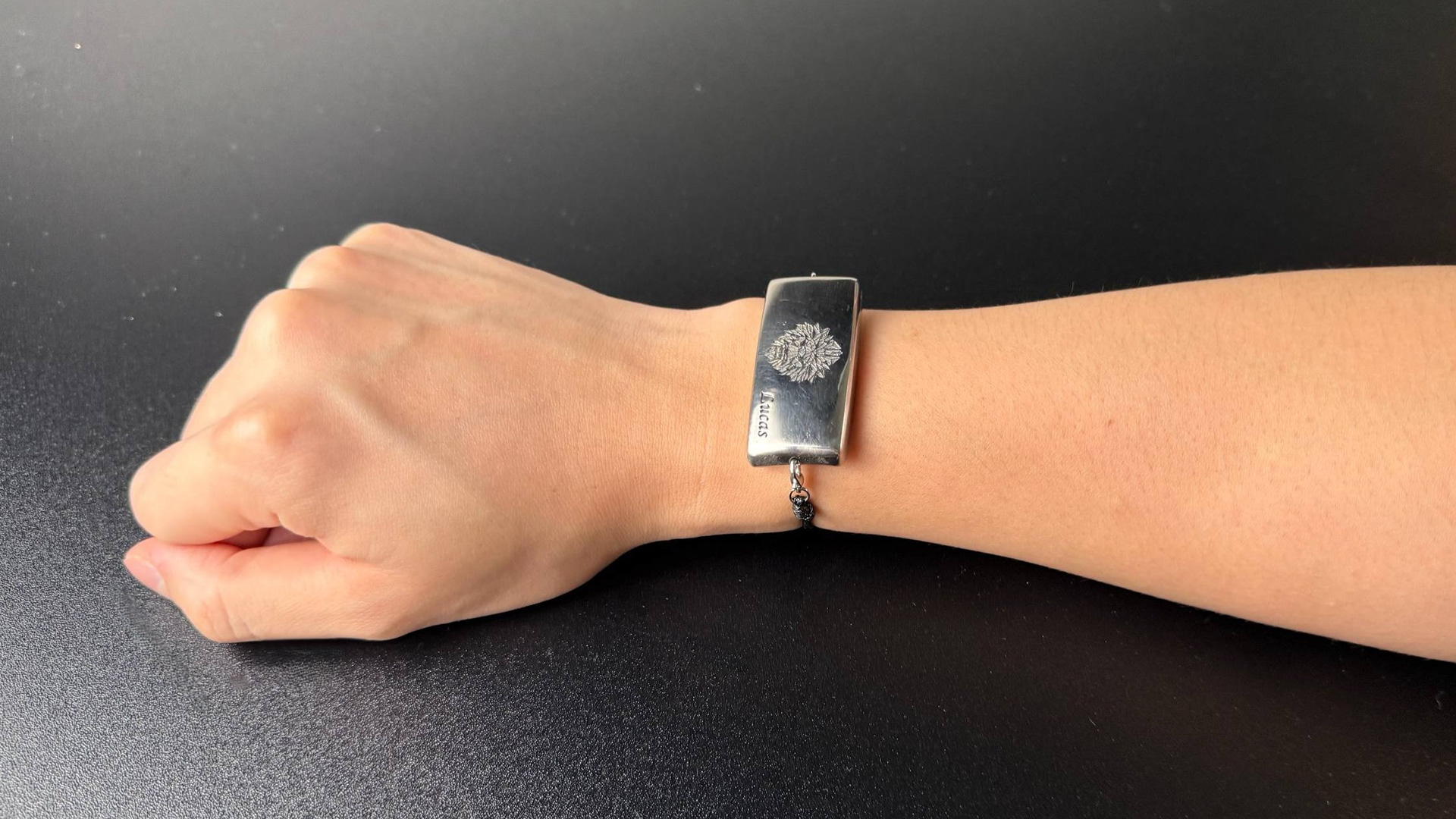
I am incredibly satisfied with the final result, particularly the look and the way it feels on the wrist. Working through the entire metal printing process, from design and powder handling to polishing, was deeply rewarding. From the initial idea to the final polish, the craftsmanship and care at each stage of the piece made it meaningful. Although it was engineered to be worn, I prefer to keep it as a display piece, a testament to the creative ingenuity and design rigour that made such a meaningful object possible.
Disclaimer & Safety Considerations
While this project highlights the creative potential of metal 3D printing, the process involves high temperatures, toxic fumes, and specialised equipment. Metal printing should never be attempted without supervision, as it carries safety risks and potential for misuse, making it important to pause and think carefully before creating. This bracelet was created solely for educational and experimental purposes, serving as a reminder to approach engineering with care and responsibility.