Just a Little Peek – The Future of Interactive Museums
"Just a Little Peek" invites audiences into Cheryl Teo’s enchanting miniature dioramas, where everyday life is reimagined on a small scale. Visitors step inside these crafted environments, shifting from observers to participants, and discover how design shapes even the most ordinary moments. Playful yet thought‑provoking, the exhibit highlights the beauty of detail and offers a fresh perspective on the built world around us.
Are Museums Still Relevant Today?
Maintaining relevance has become an ongoing challenge for museums. In an era shaped by shorter attention spans and fast media, traditional exhibition formats often struggle to connect meaningfully with audiences. To address this, our team set out to invent formats that immerse audiences in their environments, inviting deeper engagement with the story.
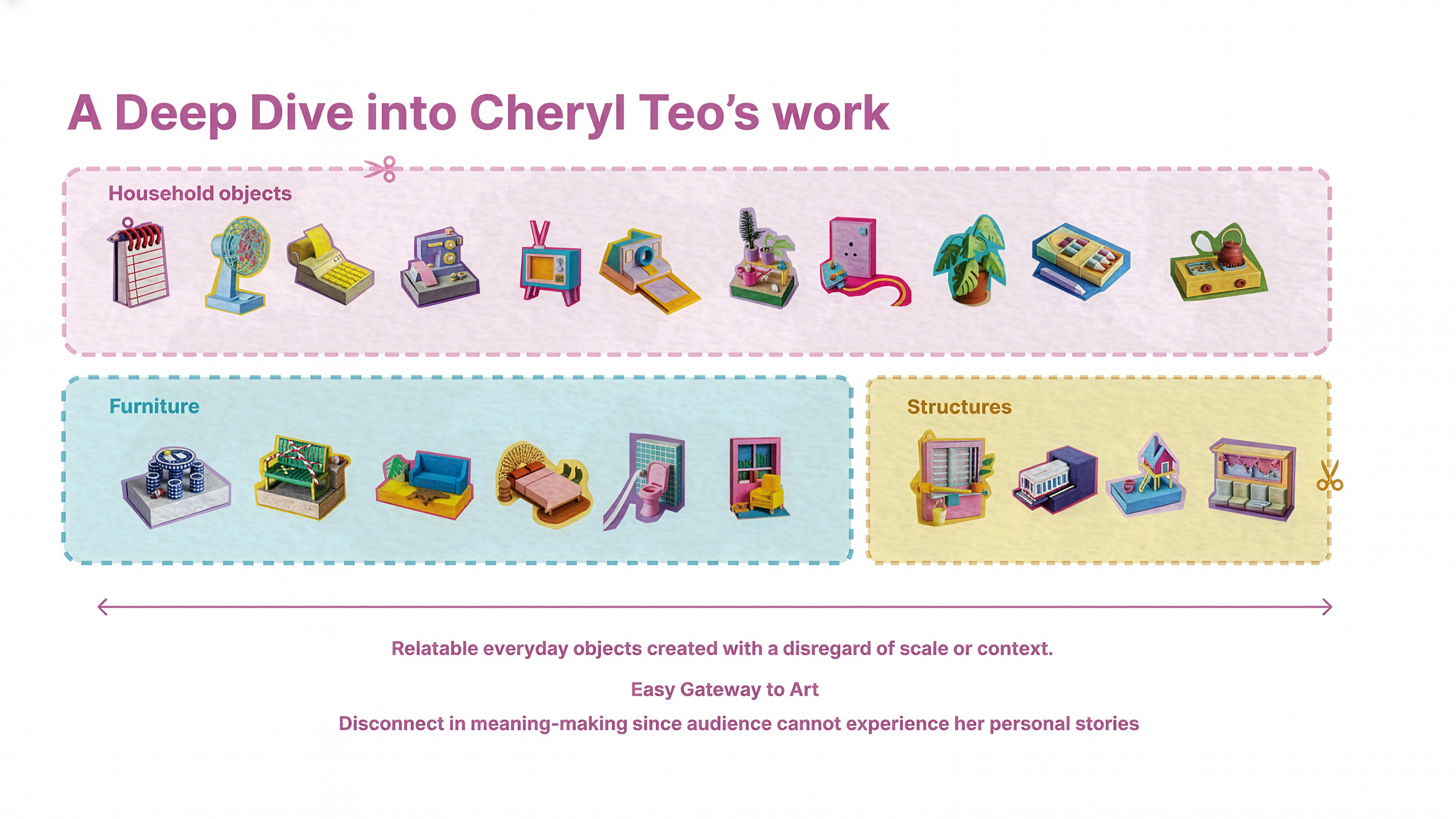
At the heart of our project was Singaporean Artist, Cheryl Teo’s whimsical paper dioramas. Beneath their playful, eye‑candy aesthetic lie deep personal stories woven into everyday objects. Yet when observed from a distance, those narratives felt less touched, waiting to be experienced more intimately. That sparked our question: how might we help viewers uncover deeper narratives and connect more meaningfully with her world?
Are we the Spectator or the Spectacle?
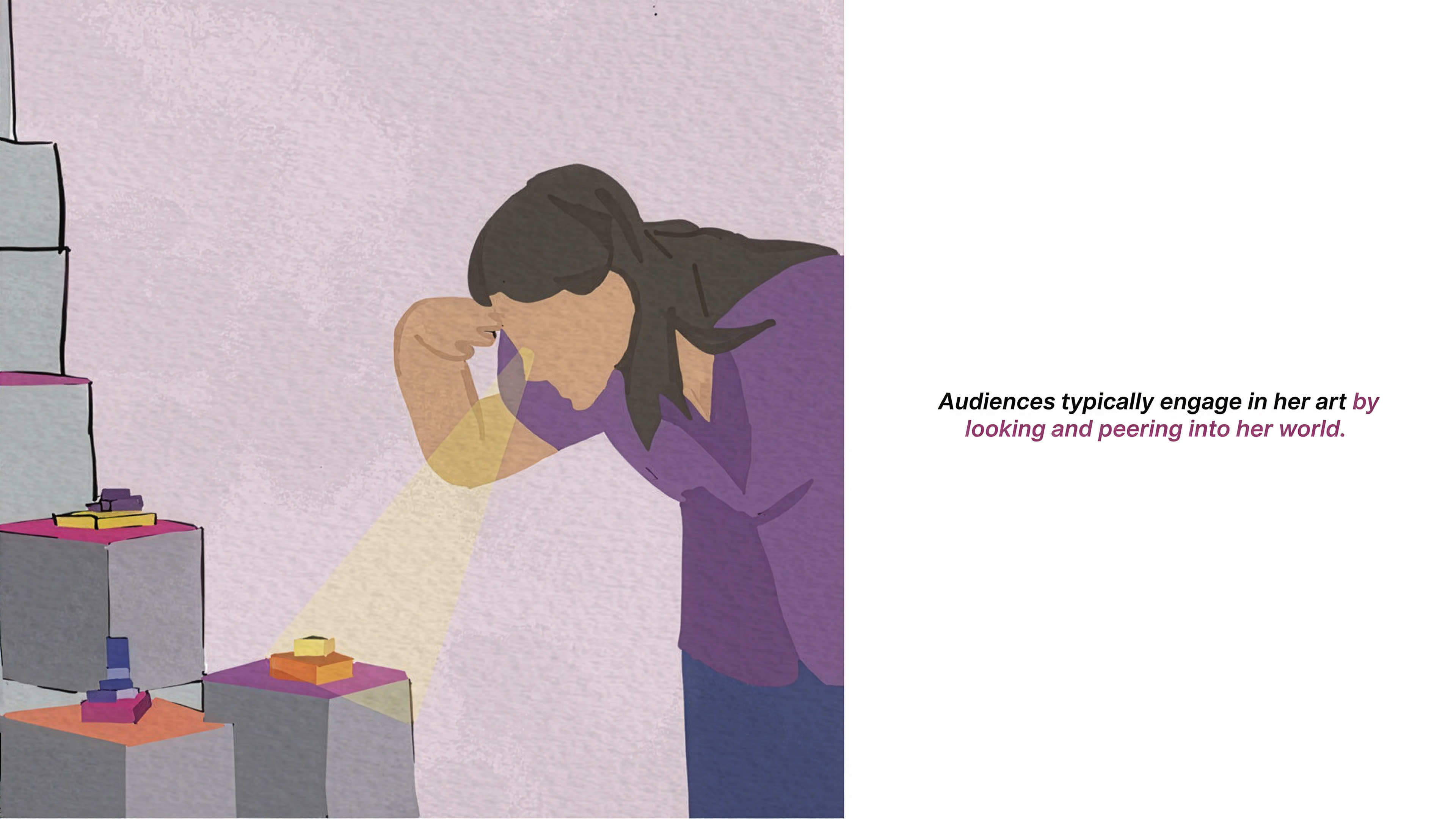
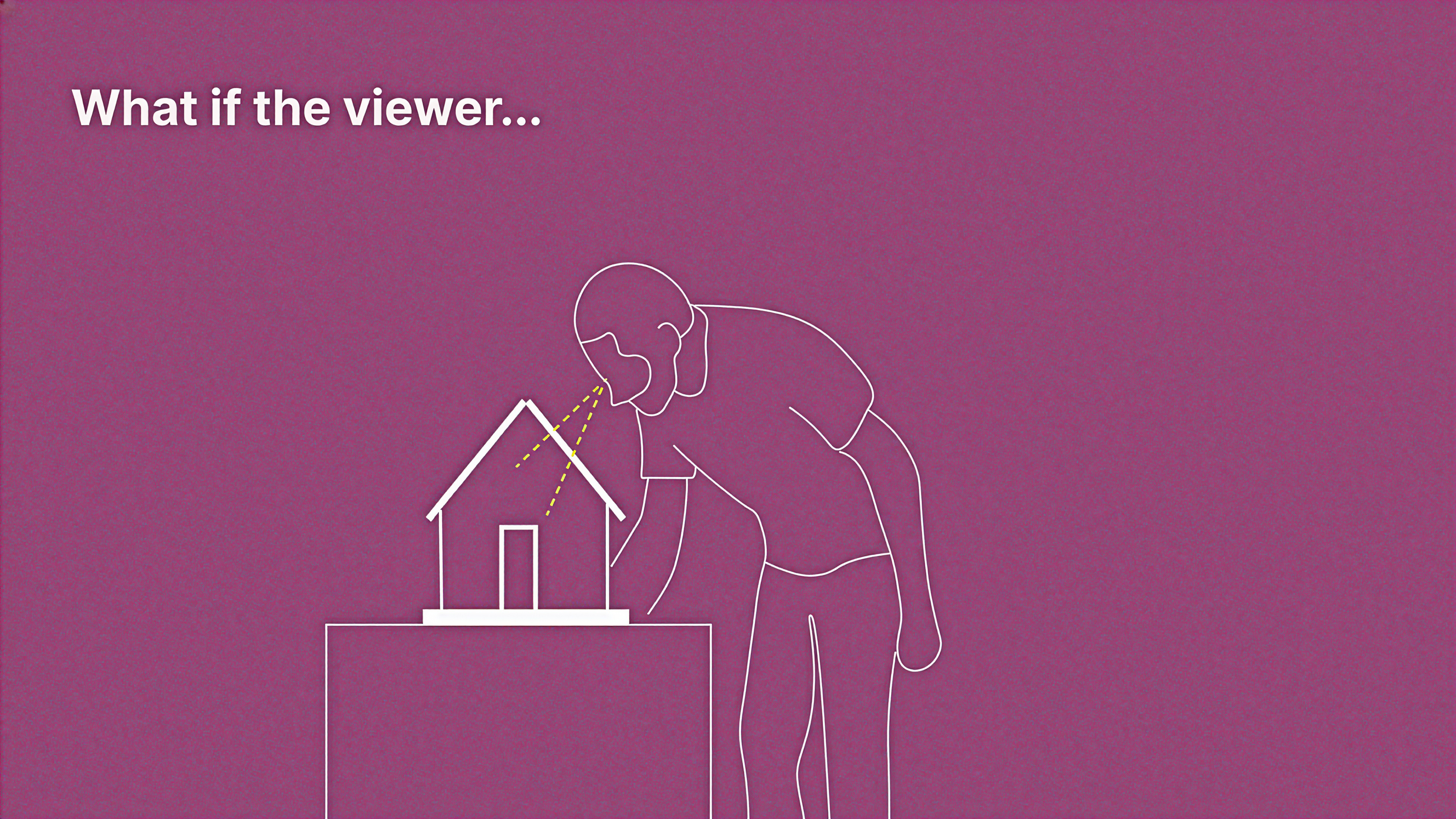
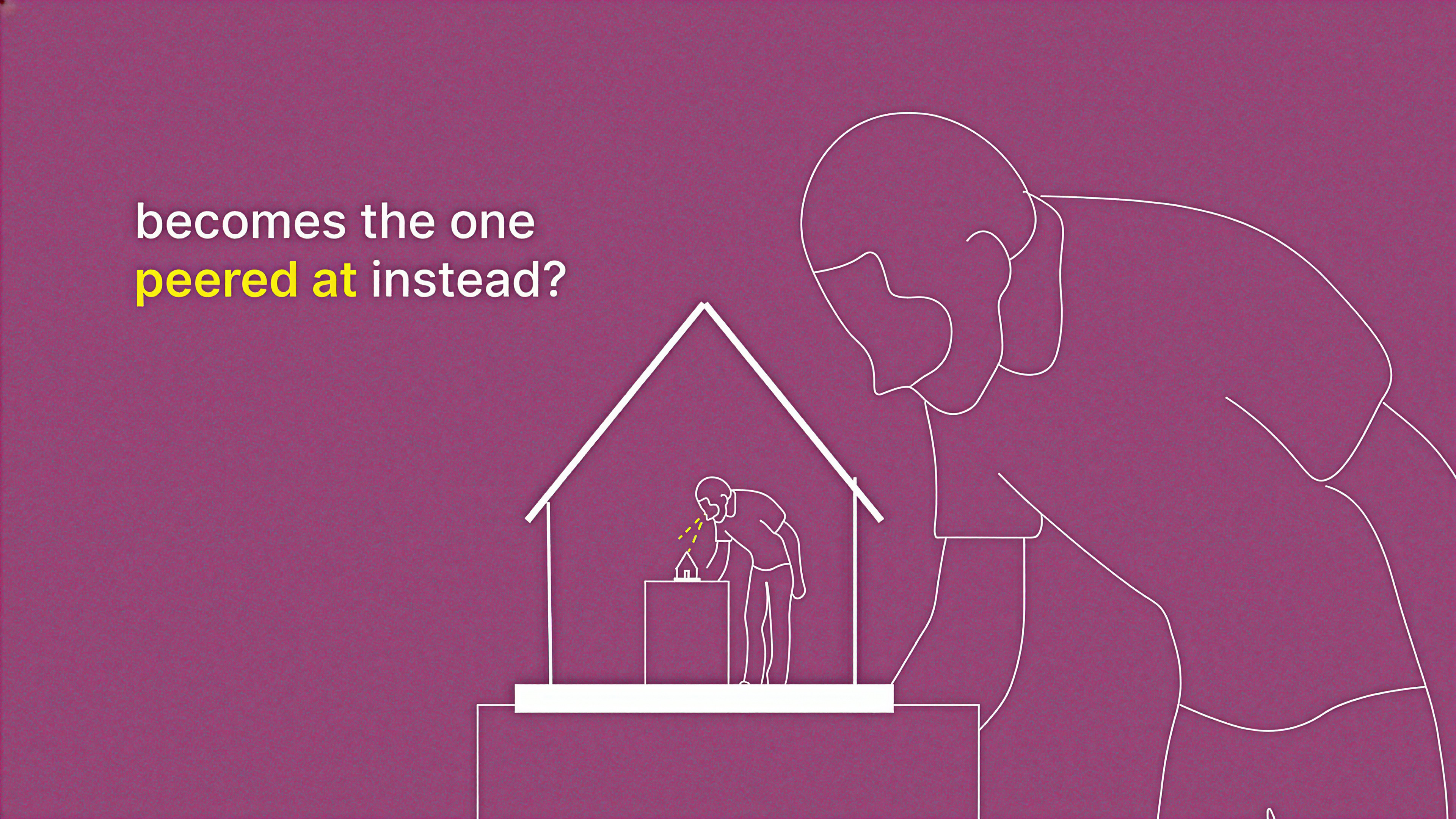
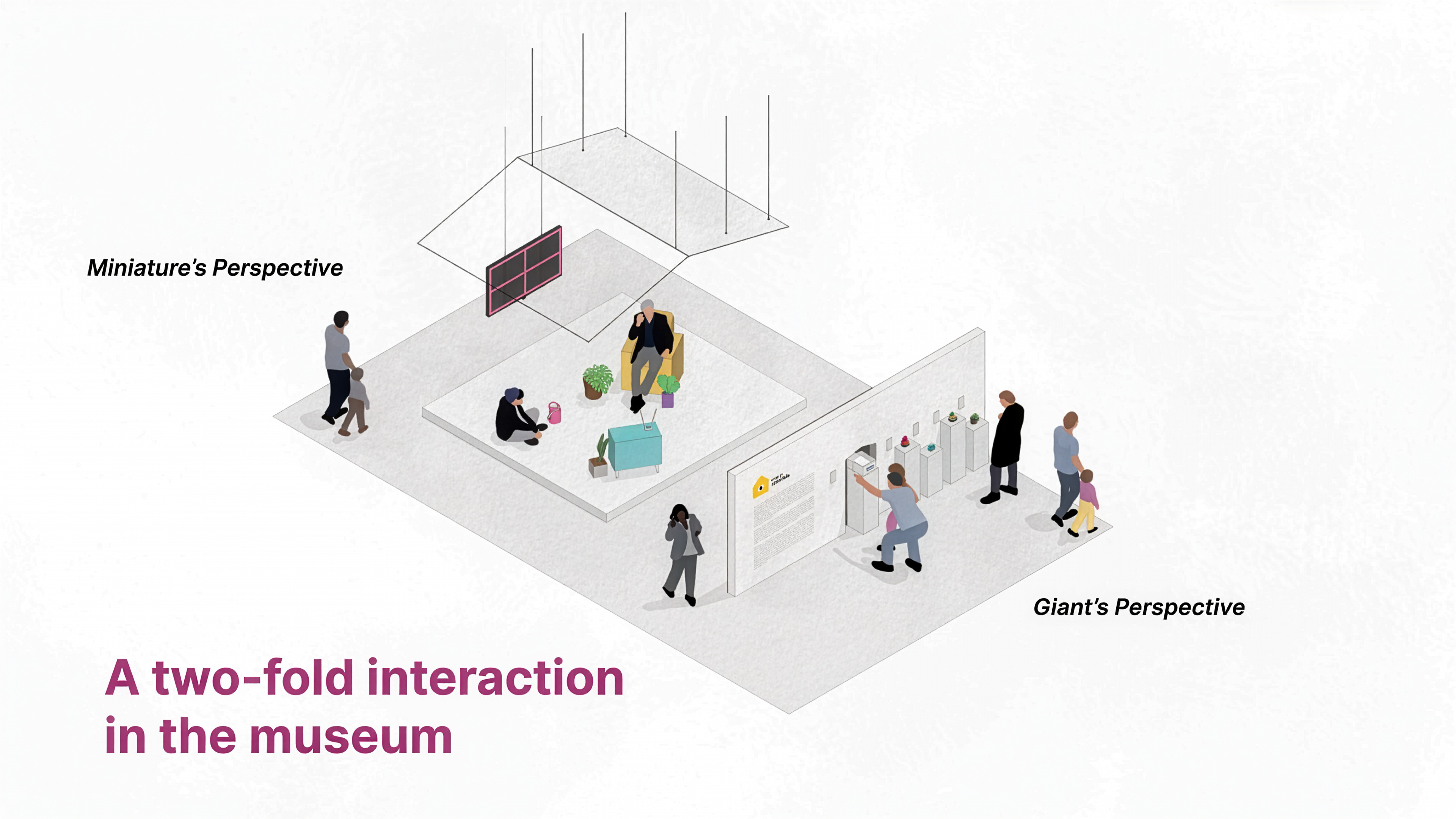
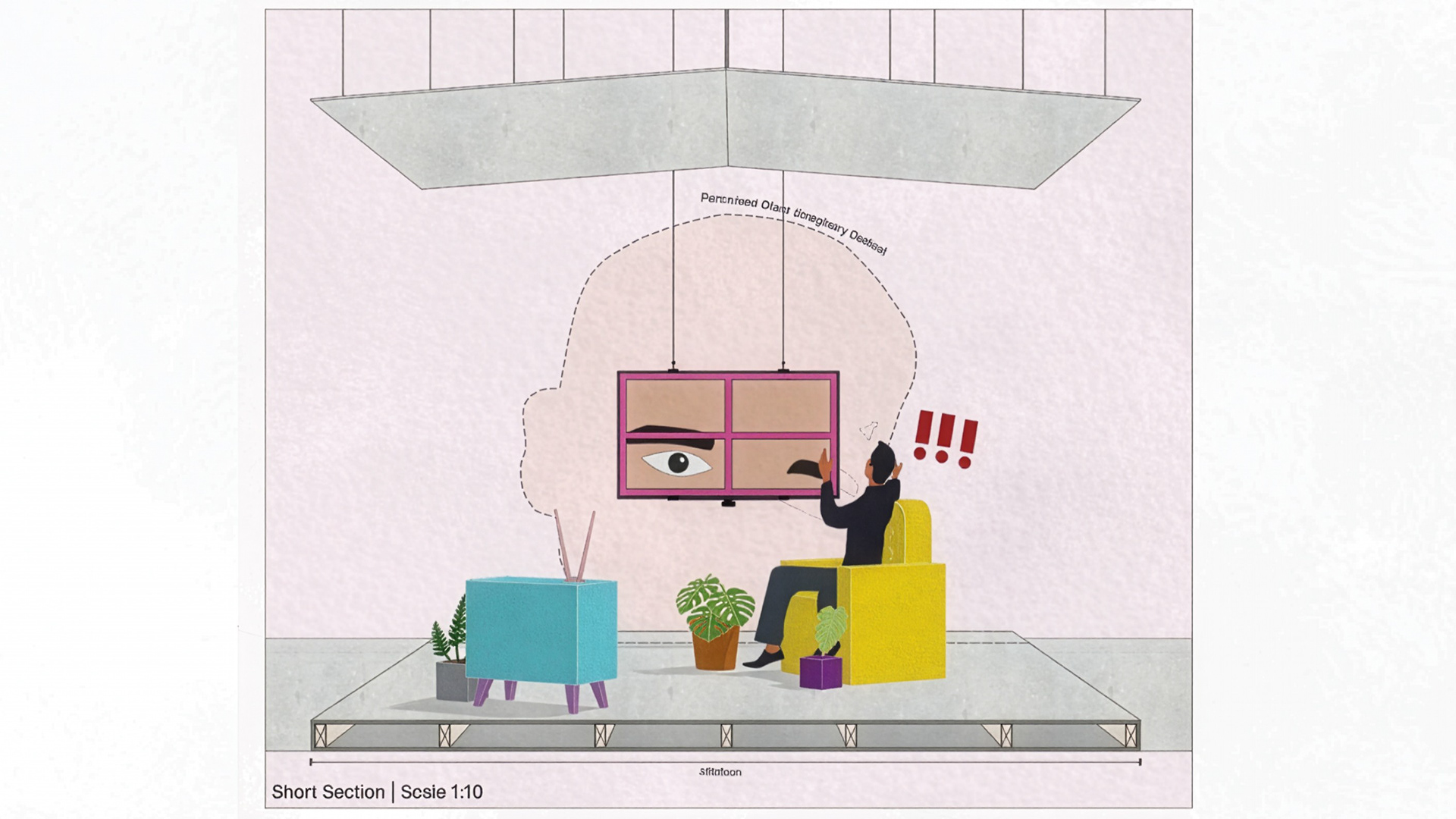
Studying Cheryl Teo’s work, we noticed that audiences often peer into her whimsical worlds from the outside, like giants gazing in. This voyeuristic act sparked a playful question: what if the roles were reversed and the viewer became the one being peered at instead? Our installation turns that idea into reality, building a living world within the artwork that invites curiosity and inverts the act of looking.
Building the Uncanny Home
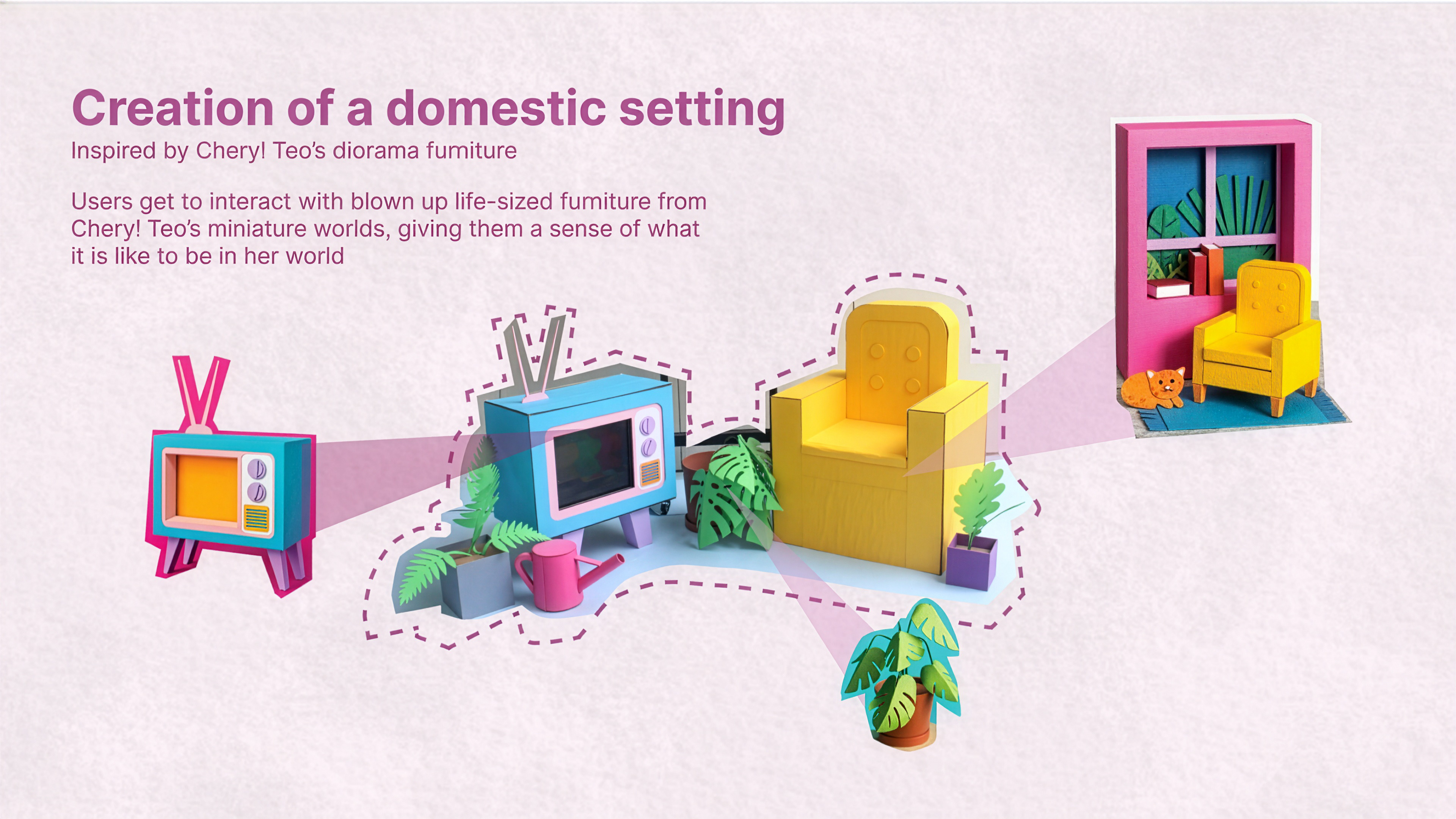
Building on the idea of peering, we were struck by how uncanny it feels to be peeked at within the intimacy of a domestic space. To amplify this unsettling tension, we expanded Cheryl Teo’s miniature creations into a life‑sized domestic setting, immersing viewers directly into her world and transforming the act of looking into an experience of being looked at.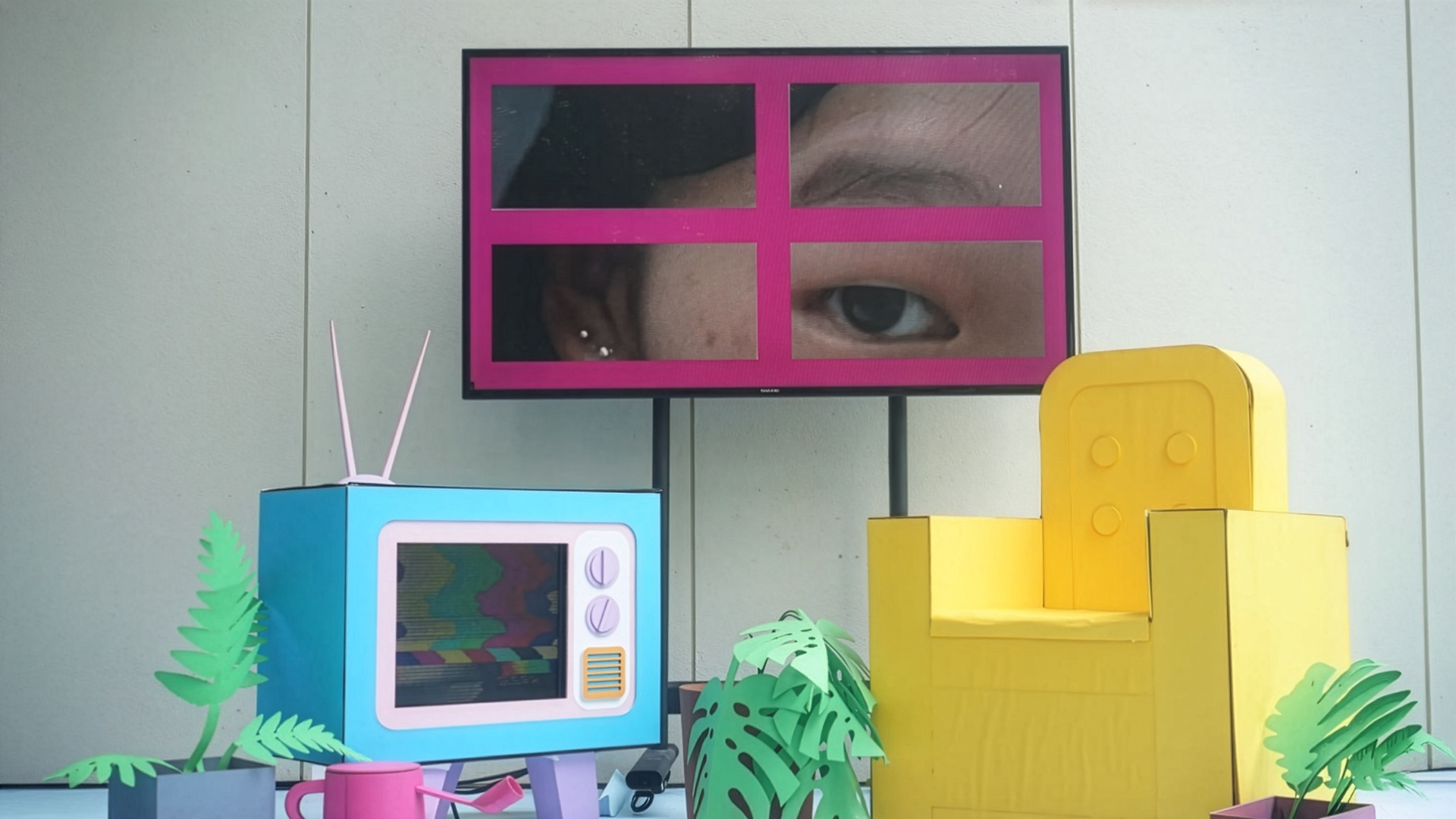
Highlights of the Exhibit
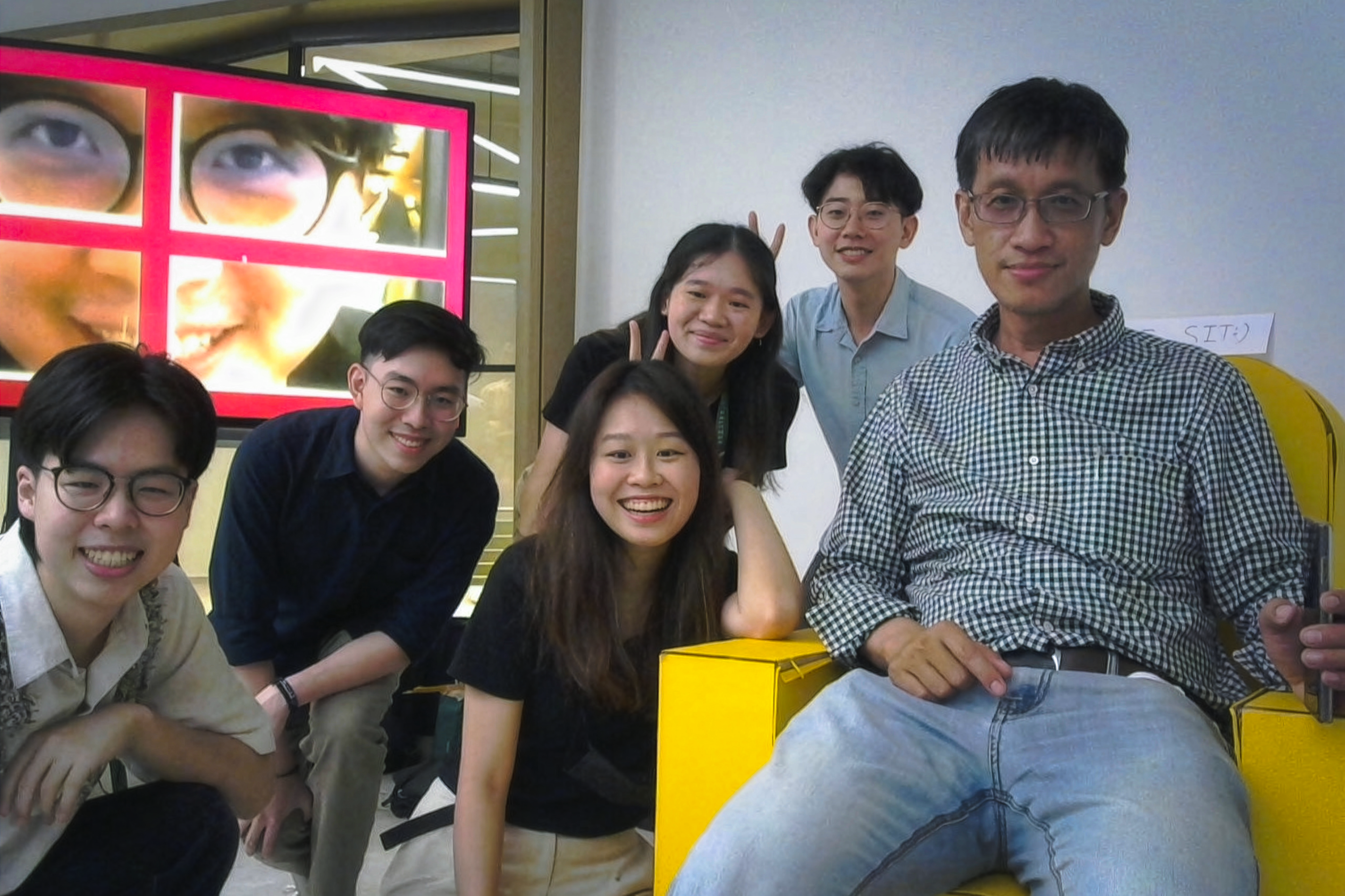
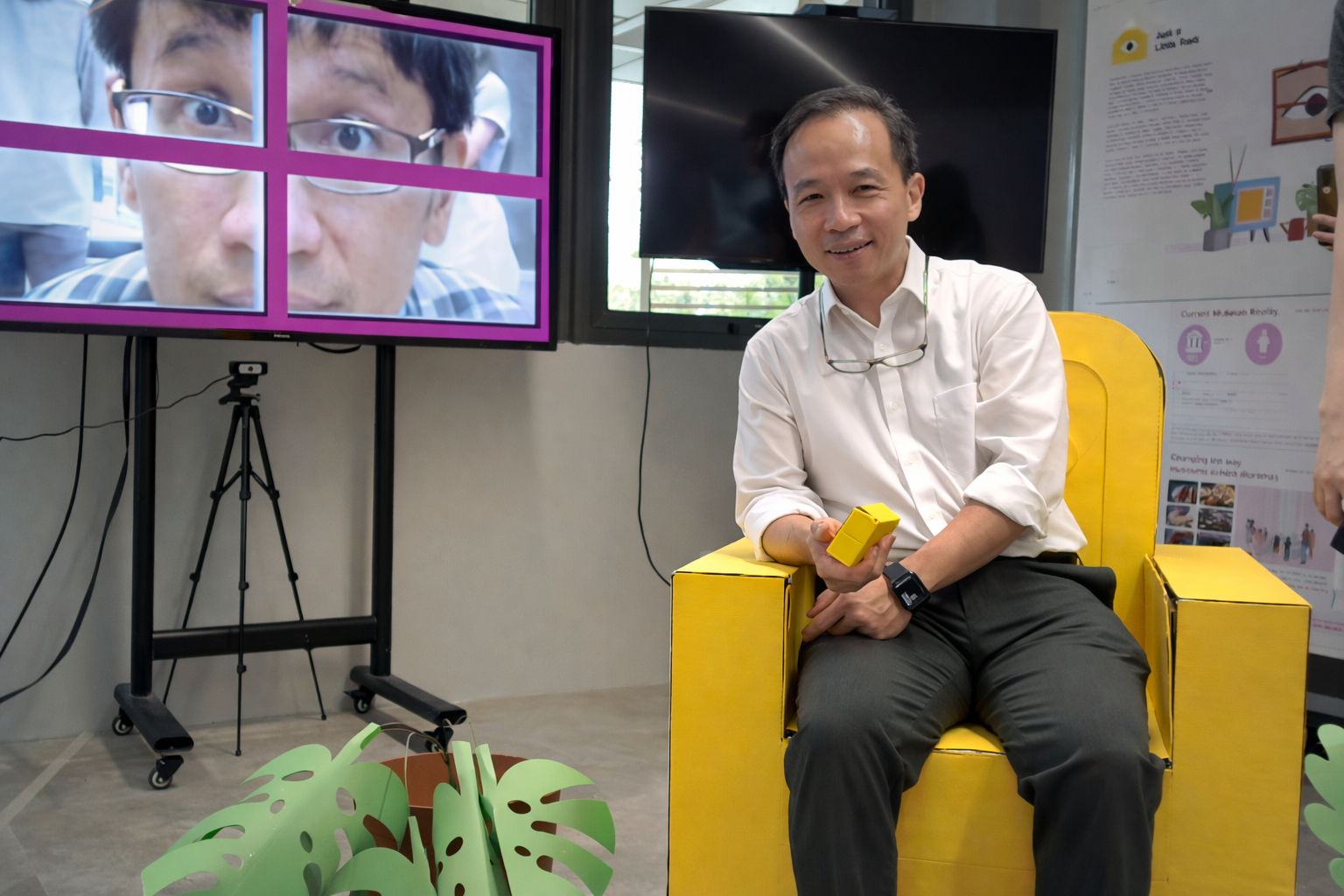
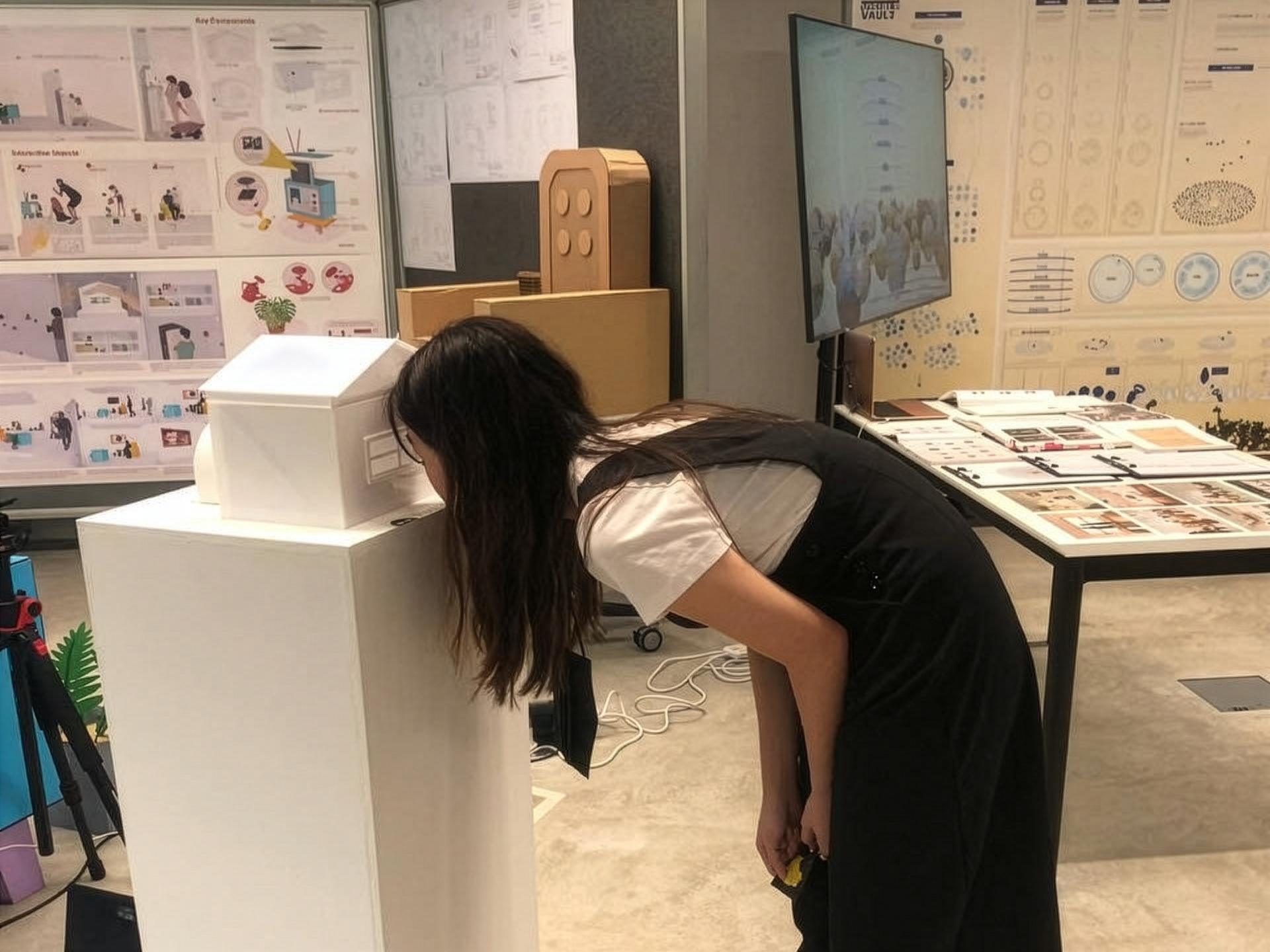
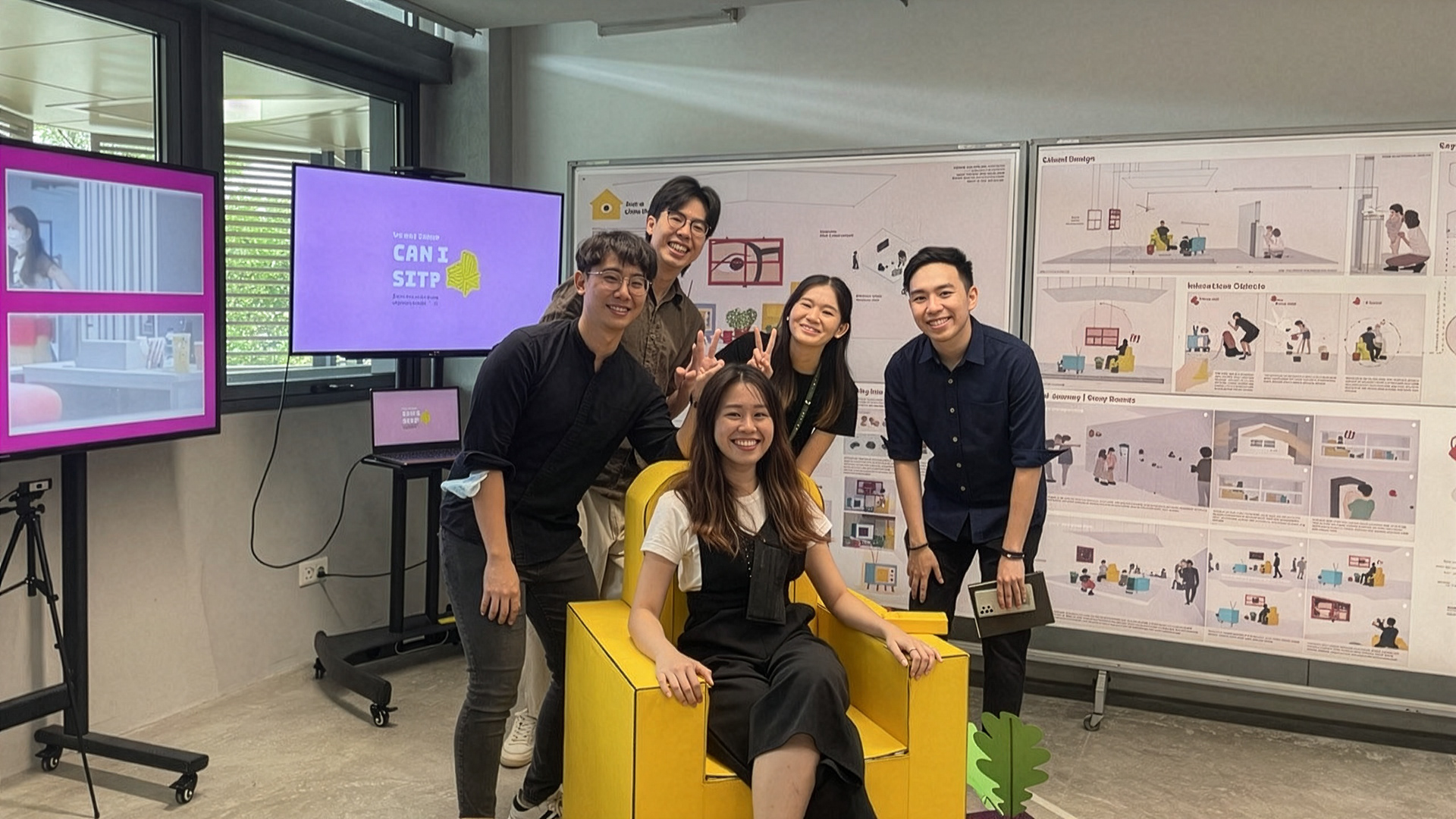
We set up the demo installation for the National University of Singapore (NUS) Division of Industrial Design (DID) platform showcase, where students and academic staff actively engaged in the experience. Their unique reactions captured the beauty of the installation, revealing the ability to inhabit both roles — the giant peering in and the miniature person living within the diorama.
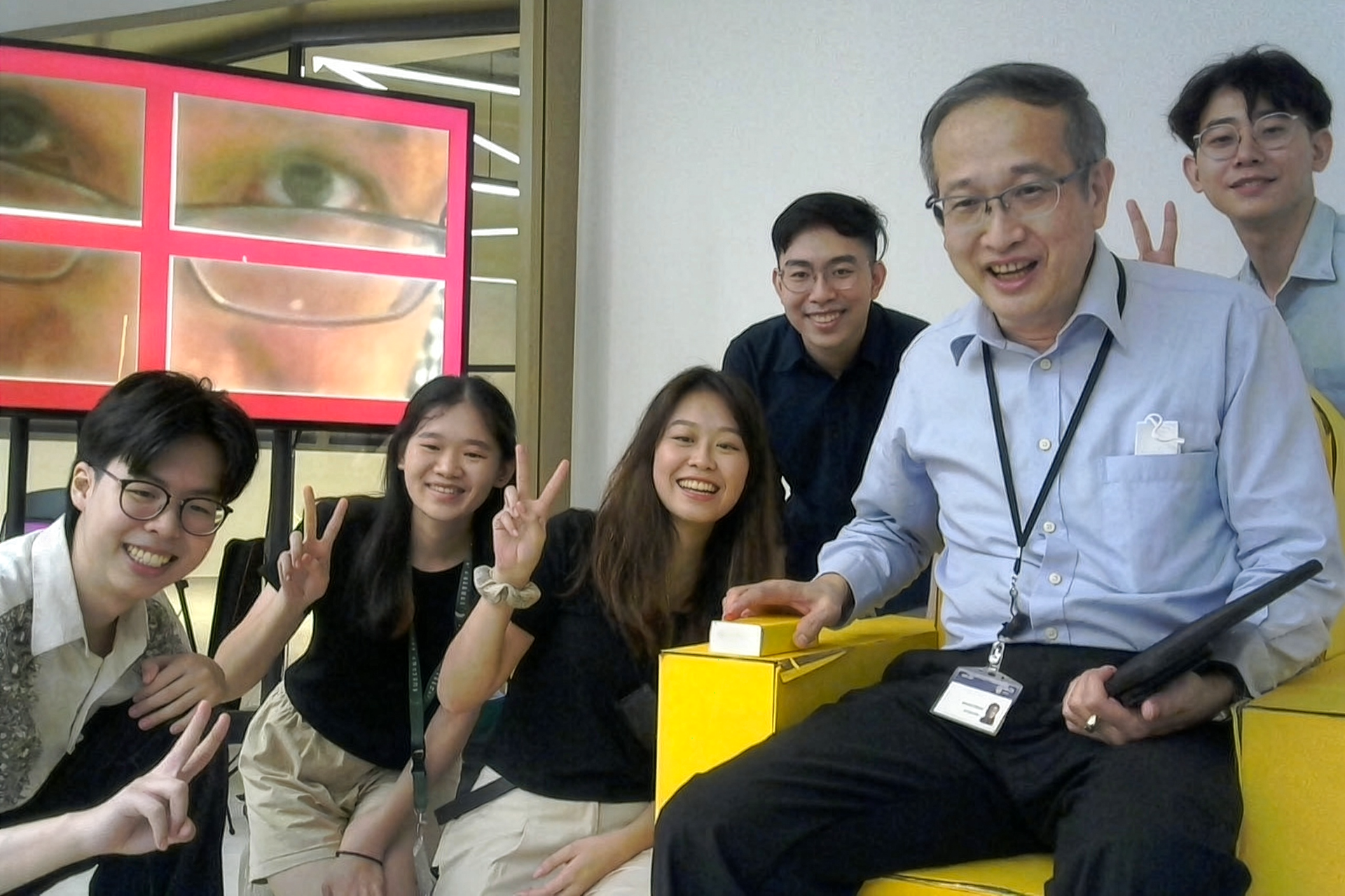
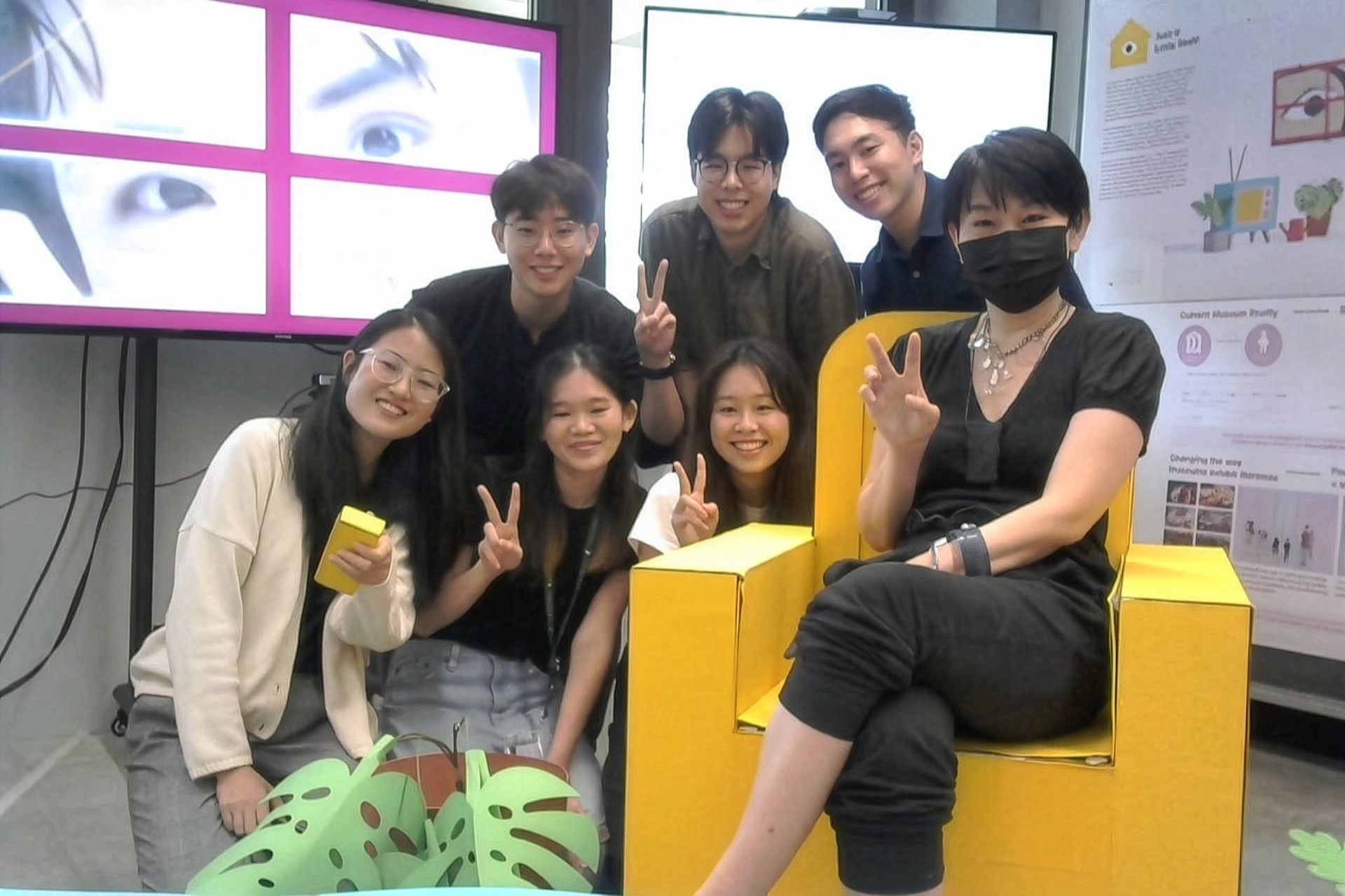
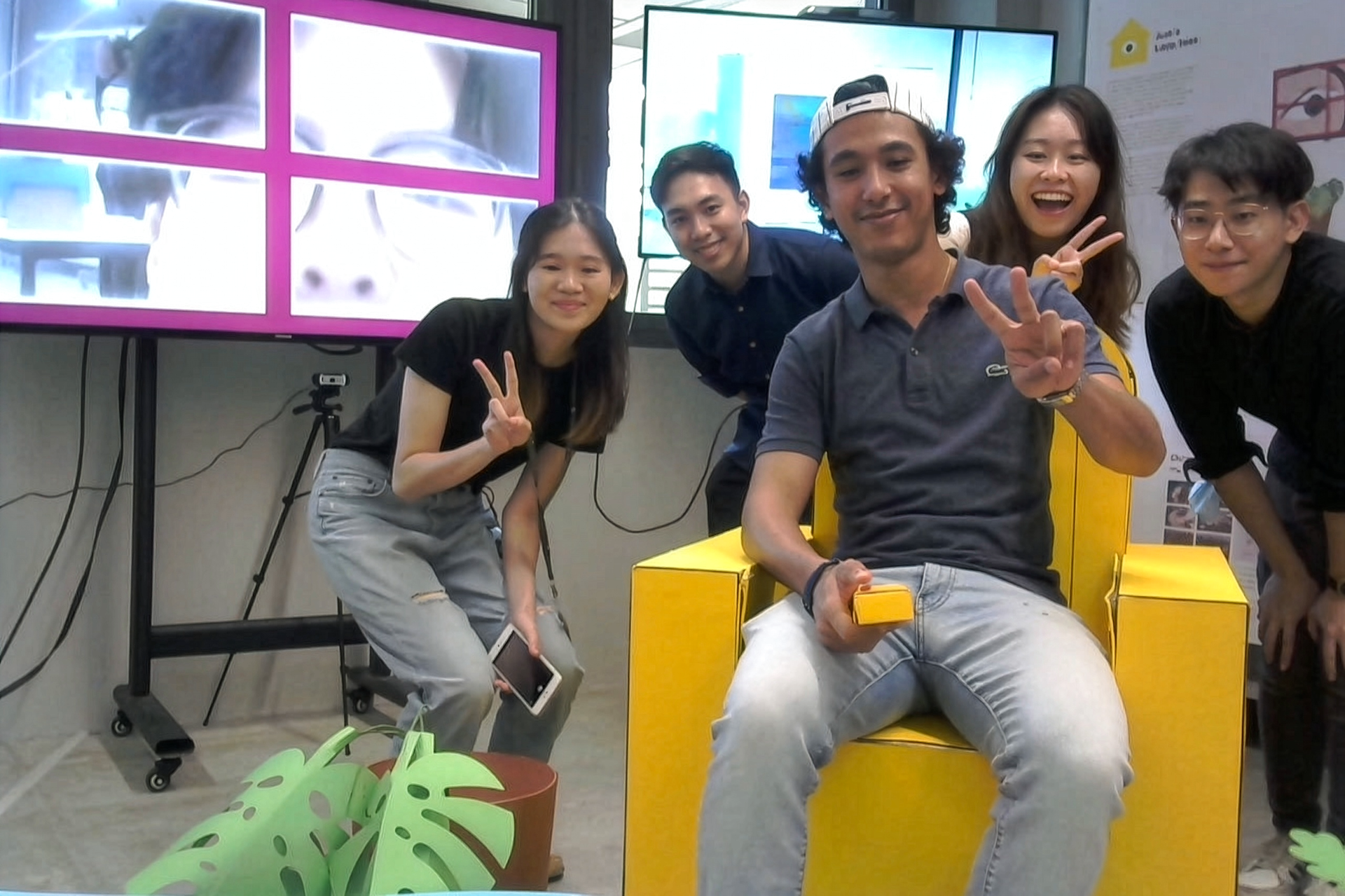
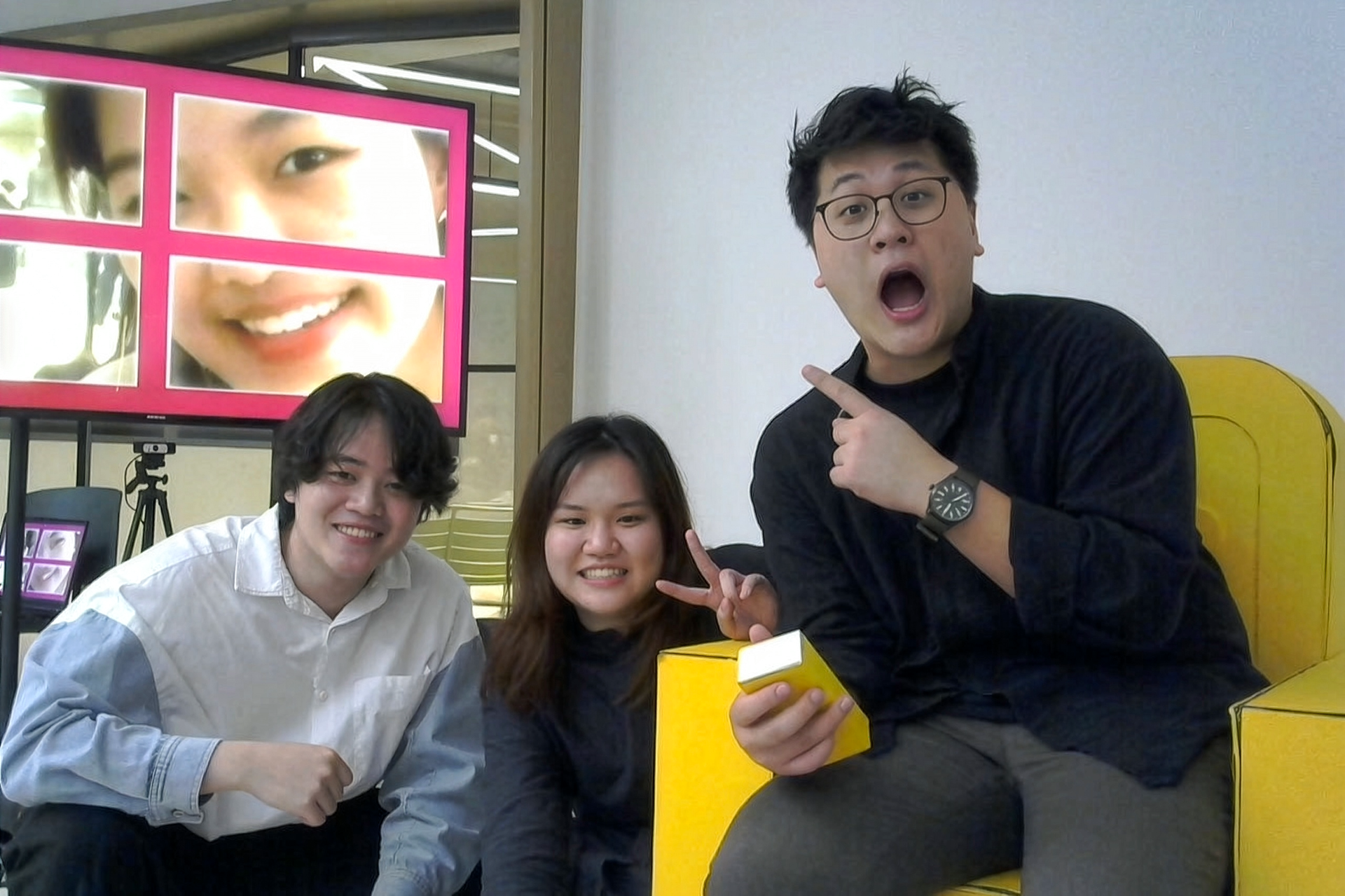
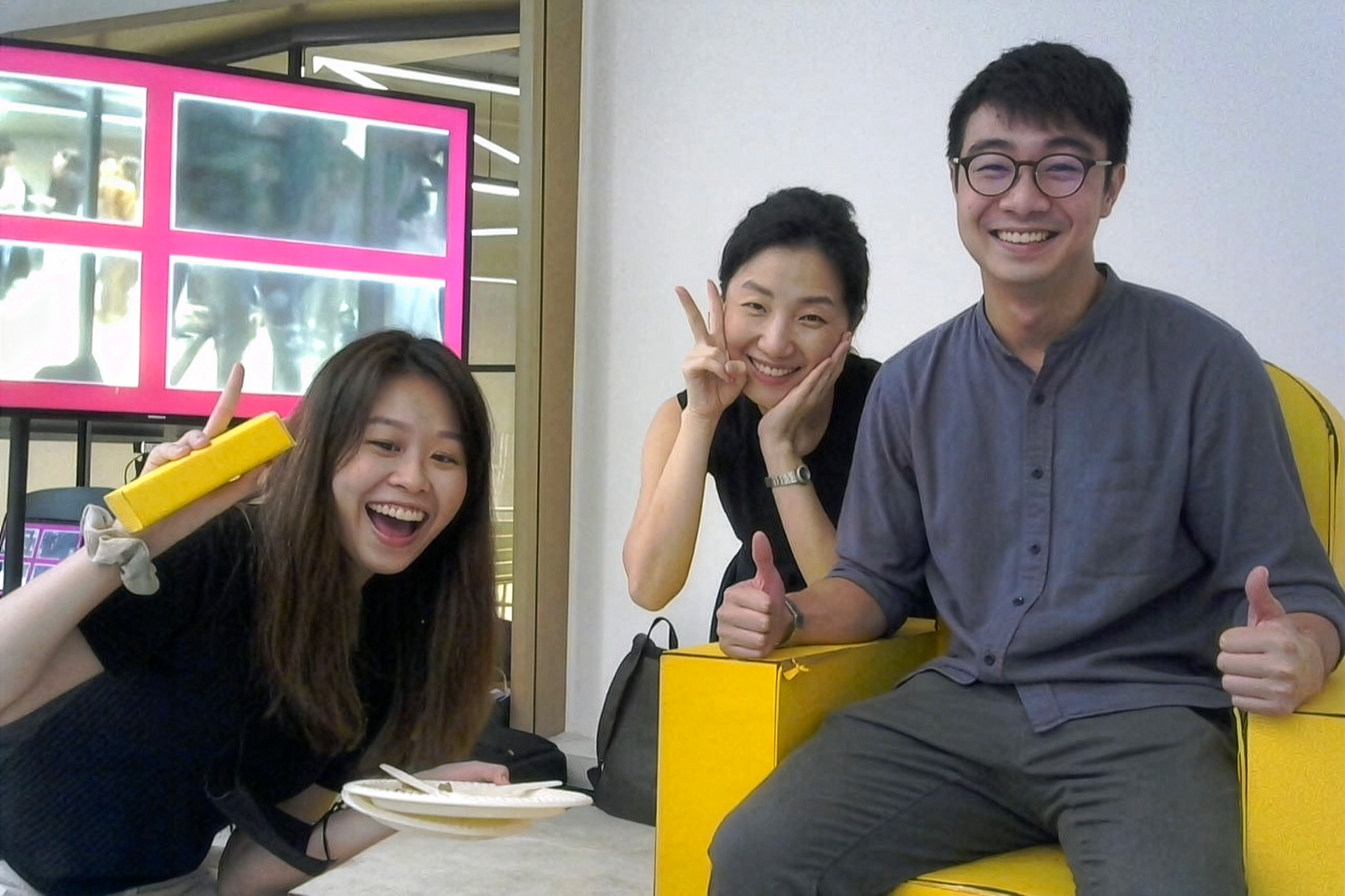
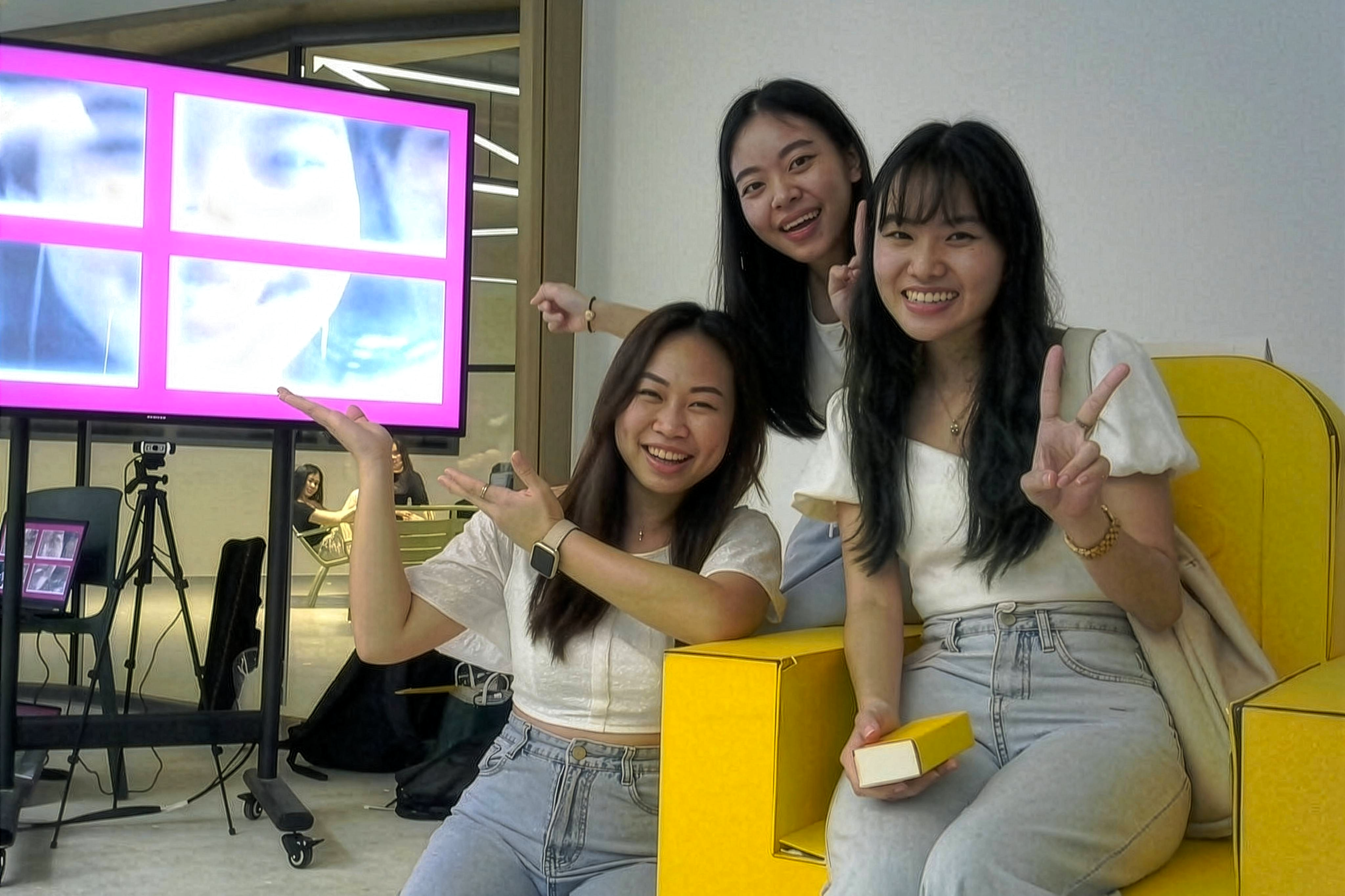
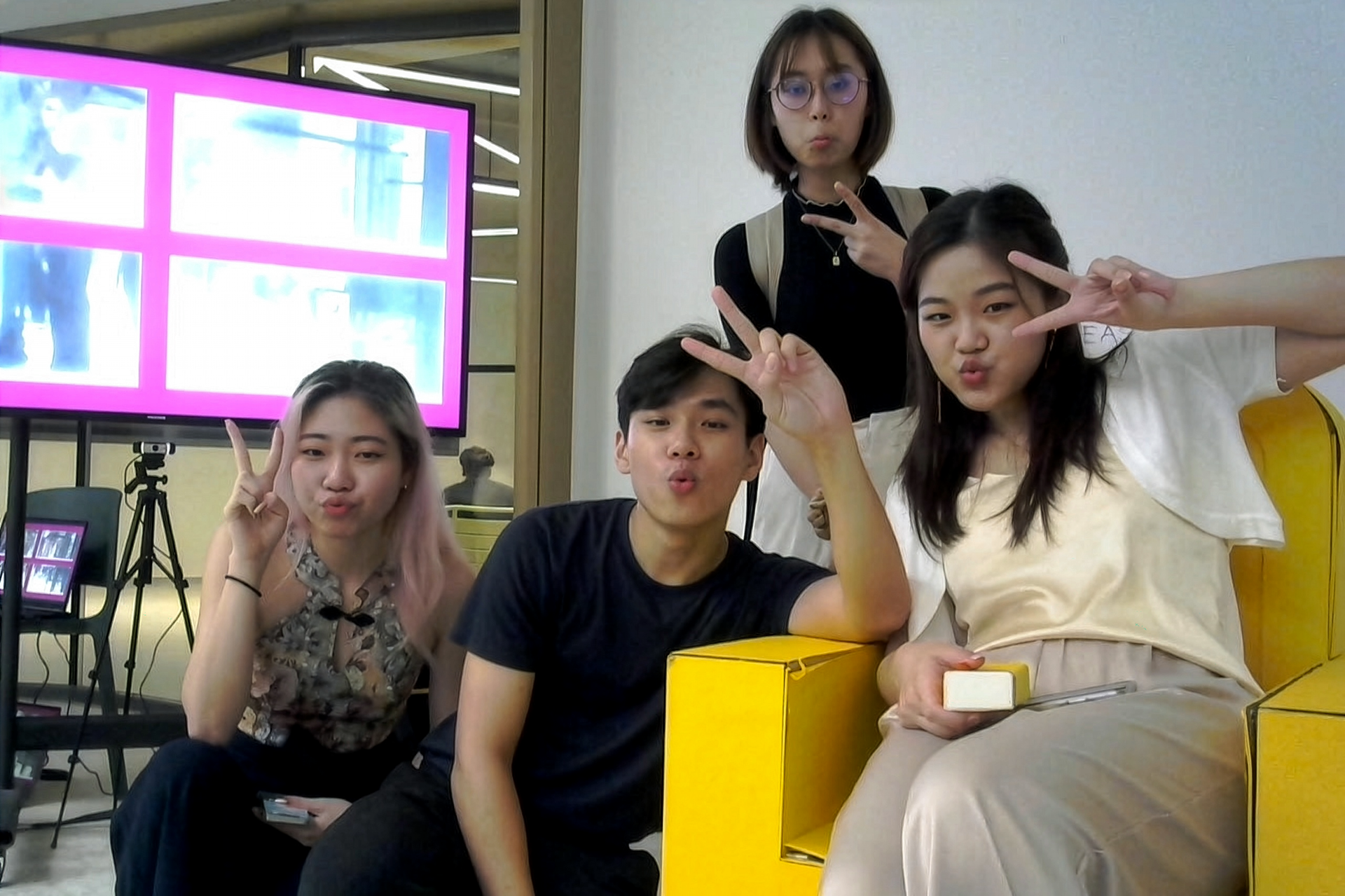
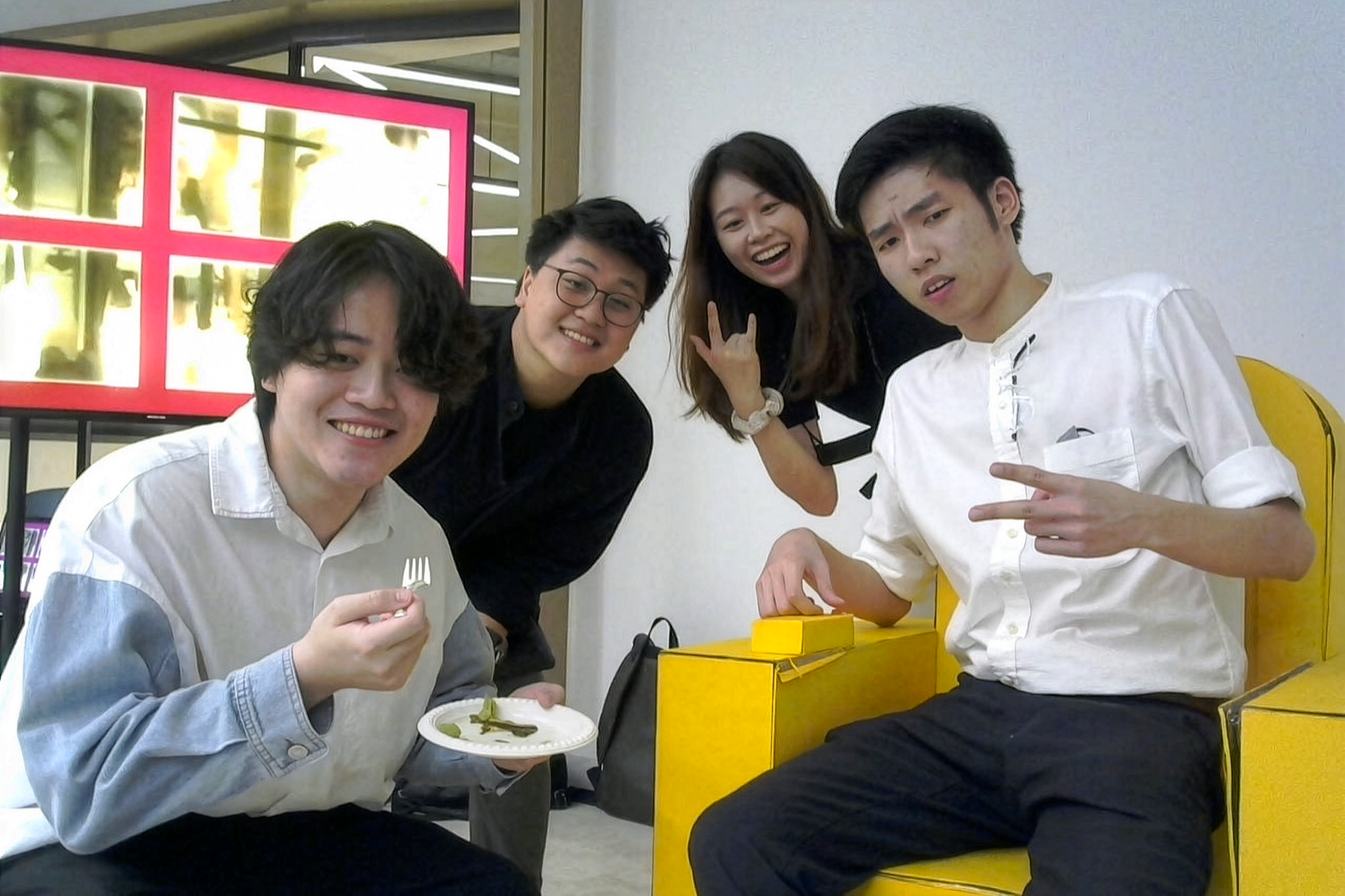
If you spot yourself in these photos and would prefer they be taken down, feel free to drop me a private message. Thank you!
Interactive Features of the Exhibit
Fabricating Cheryl Teo’s Iconic Chair
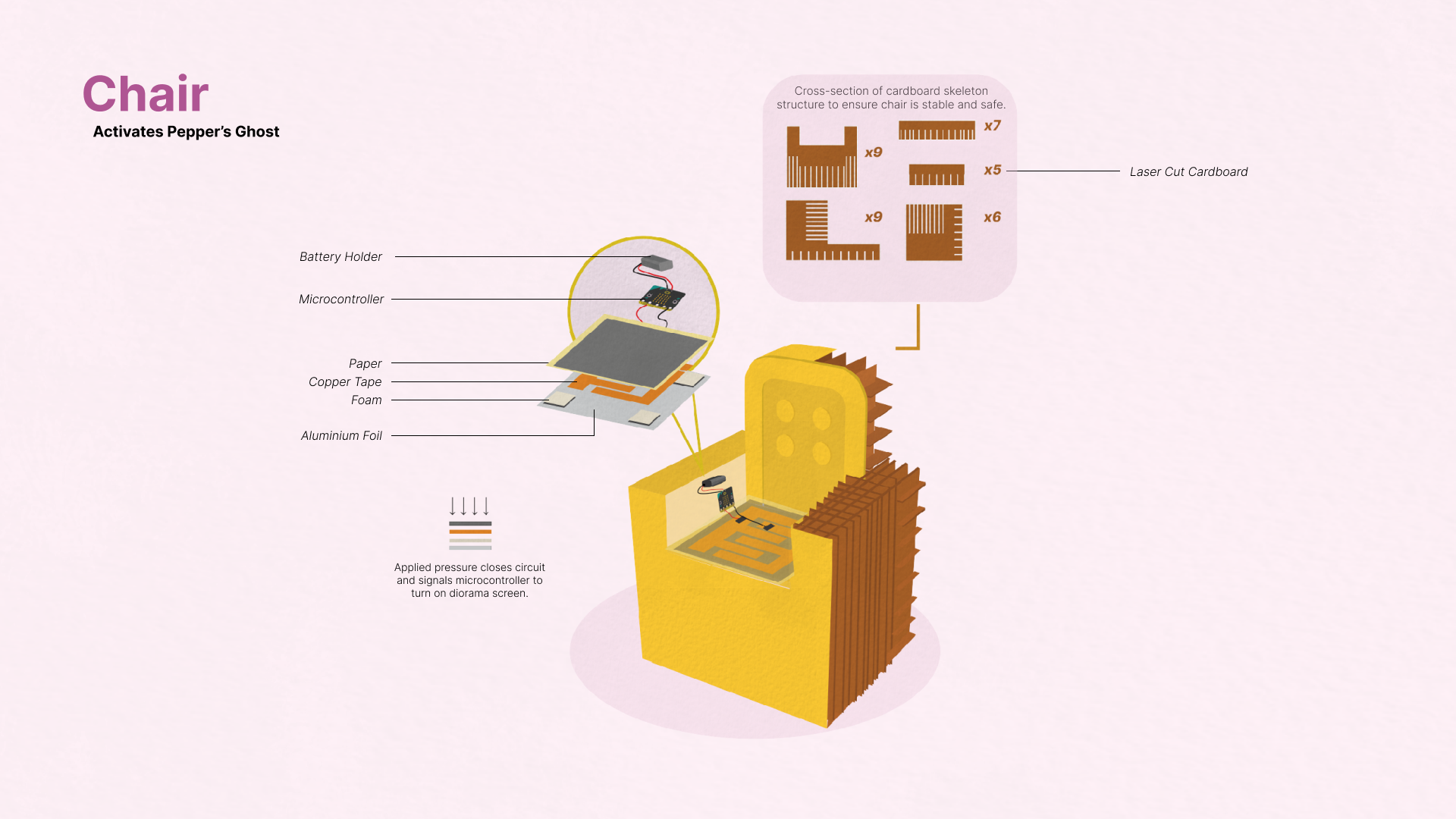
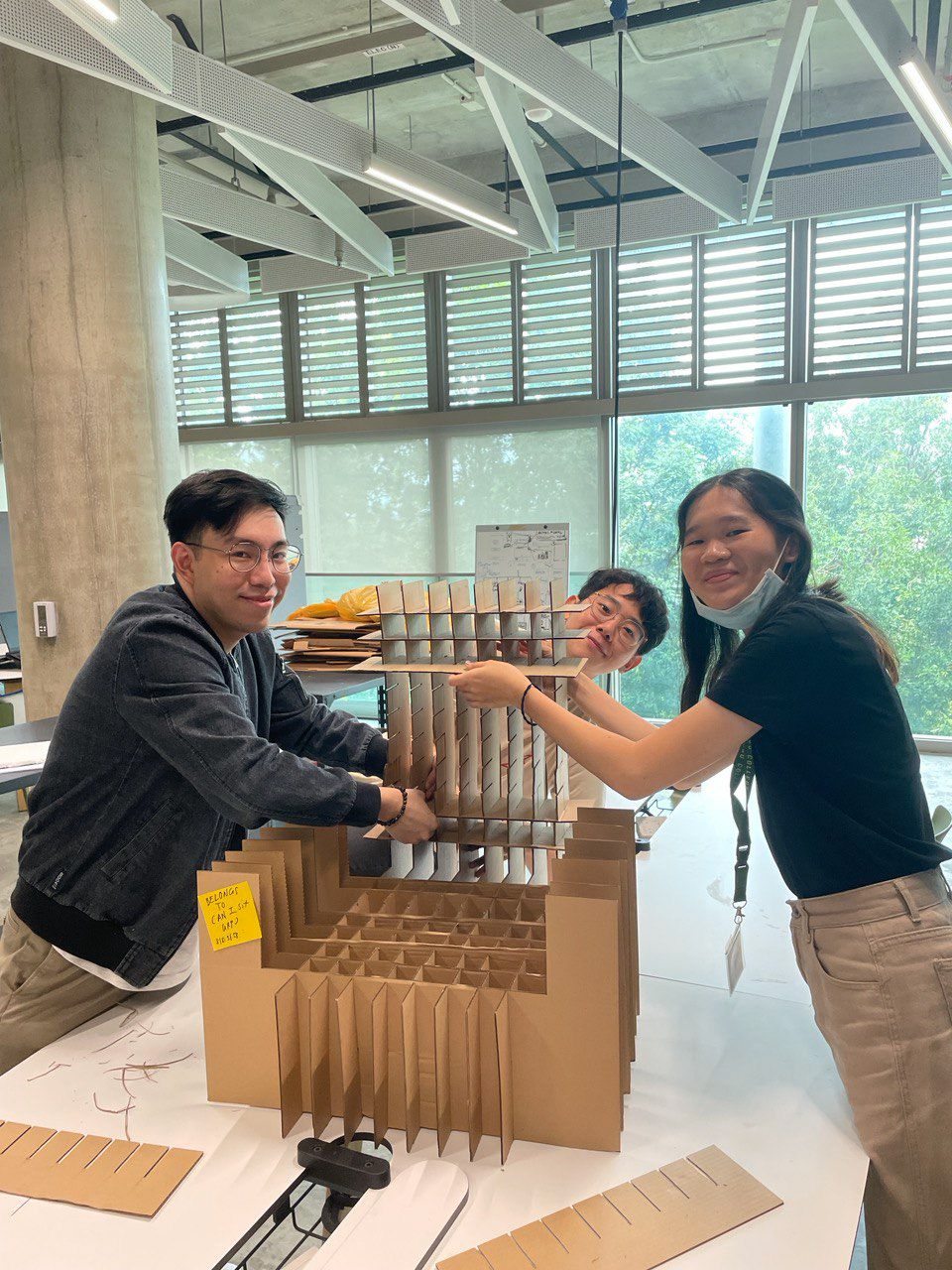
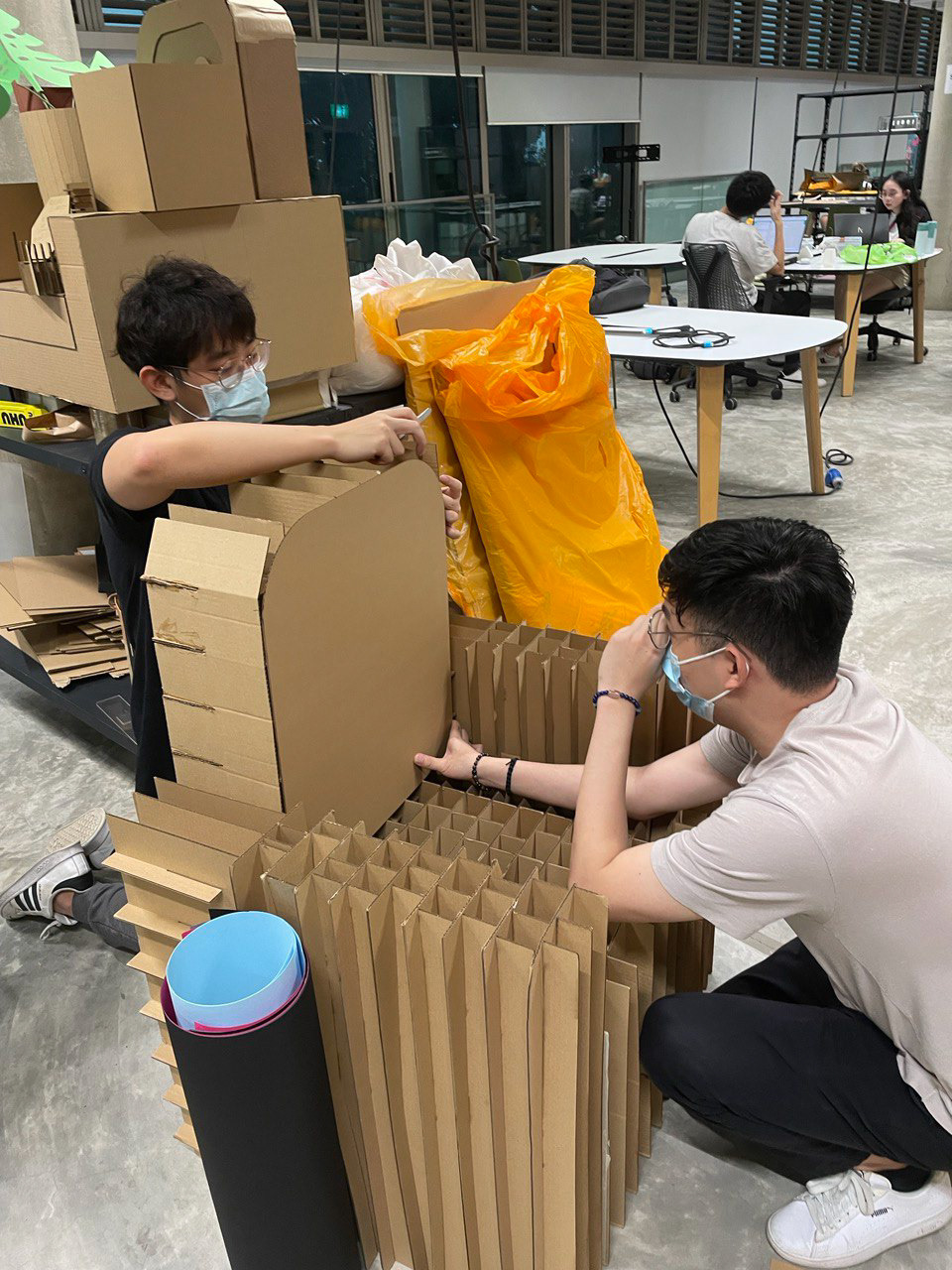
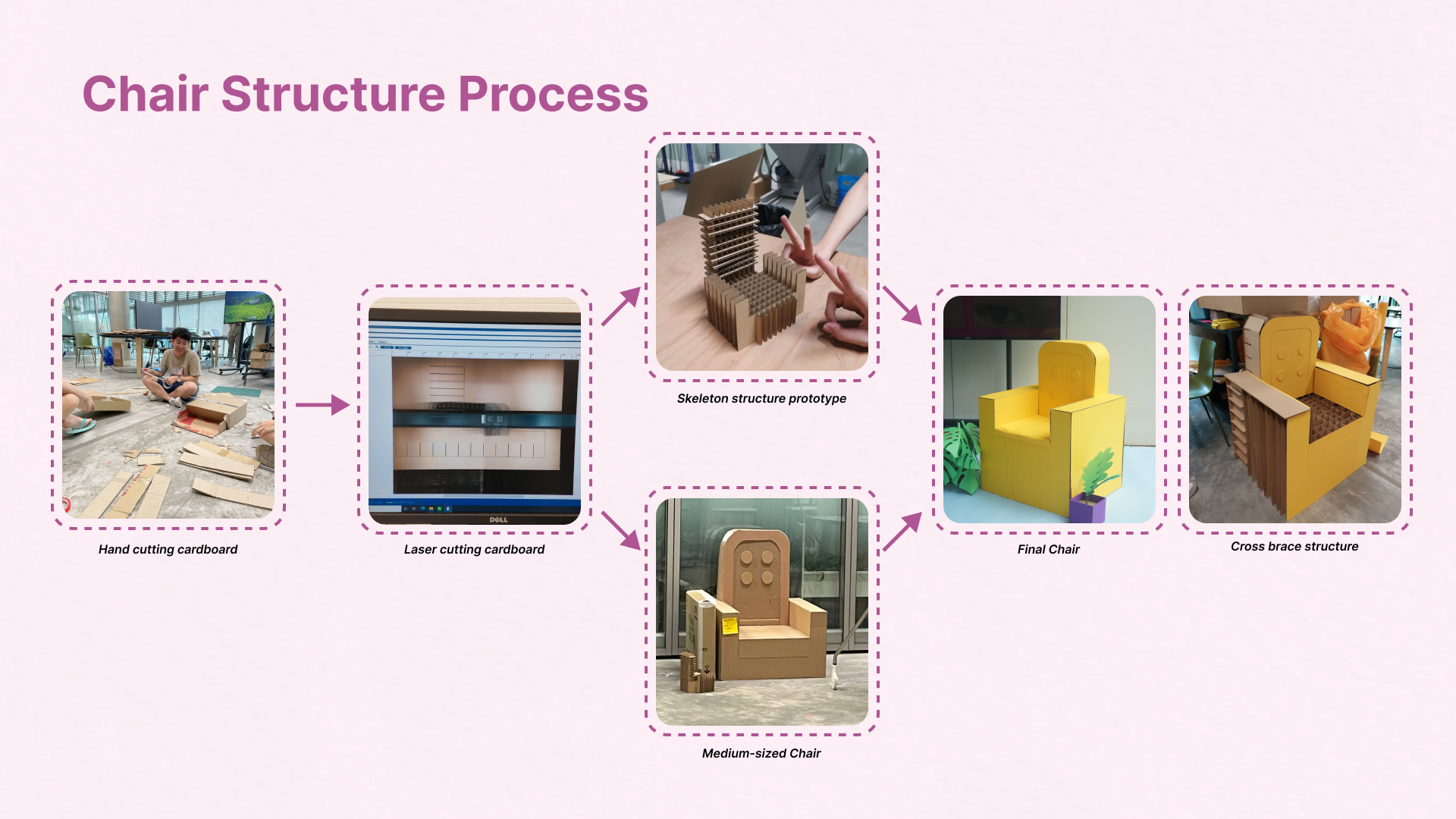
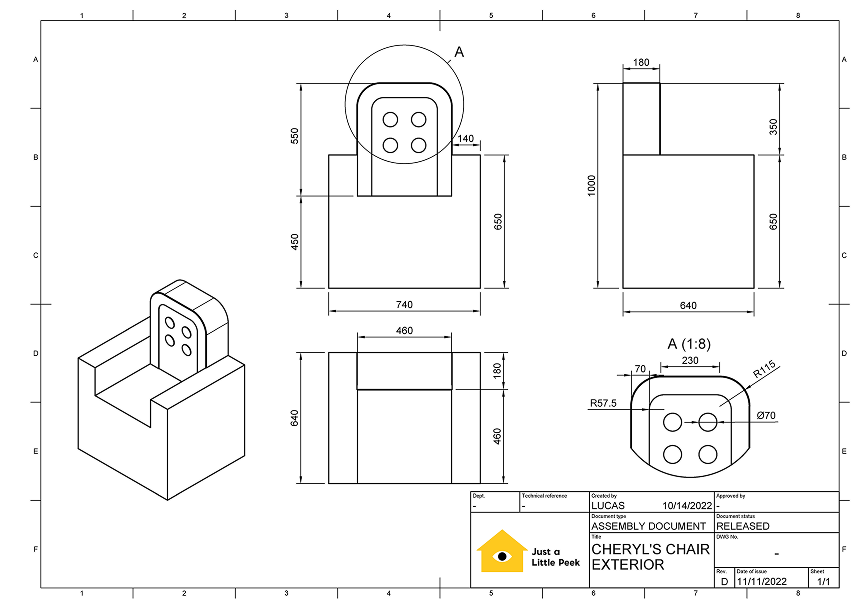
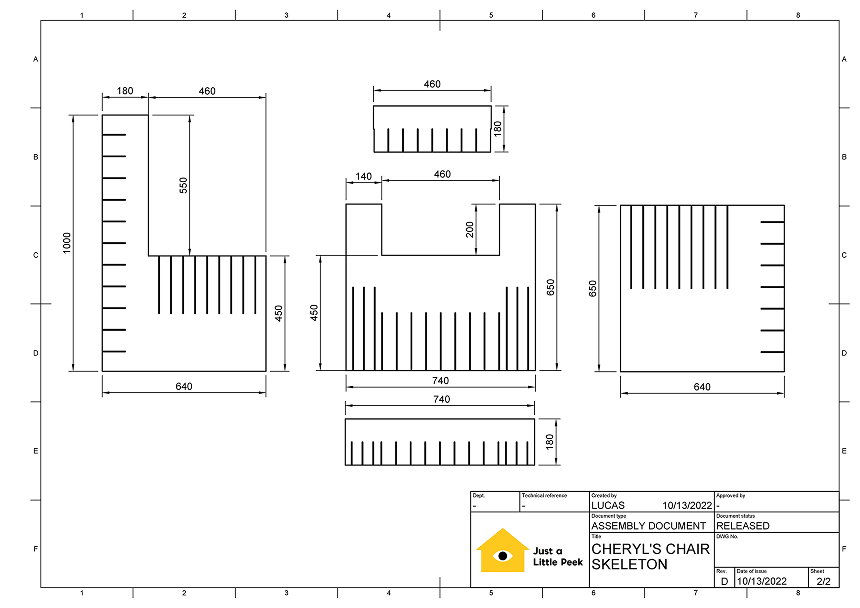
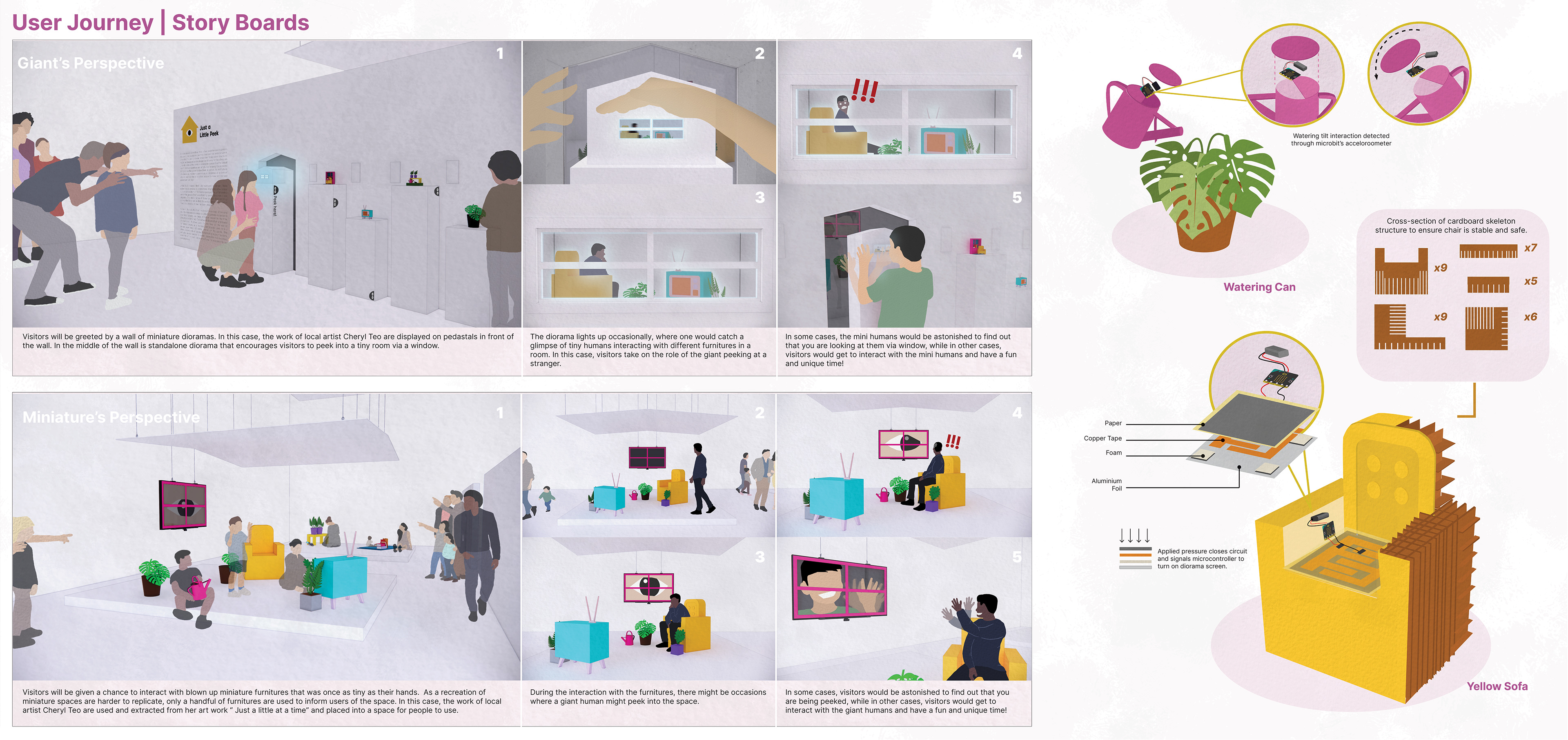
The cardboard chair was conceived as a striking yet functional piece for our museum showcase. To ensure stability, we employed a cross‑brace structure by weaving intersecting cardboard strips into a lattice that evenly distributed weight and prevented collapse. I first modelled the chair in 3D using Fusion 360 to establish precise dimensions, then extracted DXF drawings of each piece for laser cutting. After assembling the cardboard components by hand, we applied a vibrant yellow paper finish, resulting in a durable, built-from-the-ground-up chair that can support multiple people.
Chair Sensor Mechanism
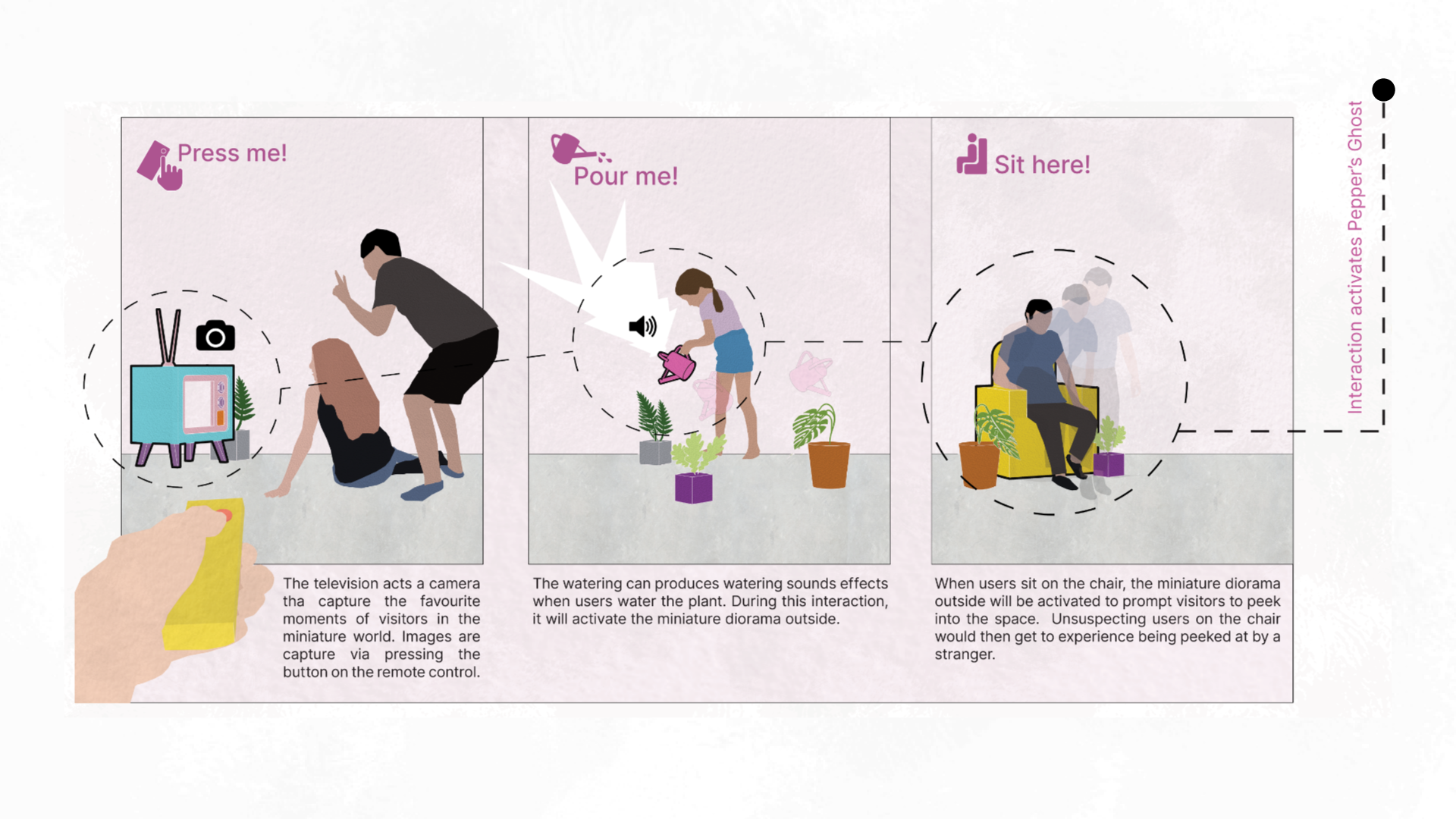
When we designed the chair, we wanted the interaction to feel natural. Sitting down activates a custom load‑force sensor that sends a Bluetooth signal to bring the diorama to life. The circuit, built with copper tape, aluminium foil and foam padding, compresses under weight to close the connection. Standing up releases the pressure, breaking the circuit and sending another signal to switch it off. A simple sit‑and‑rise becomes a playful way to step in and out of the story.
Immersive Diorama Illusion
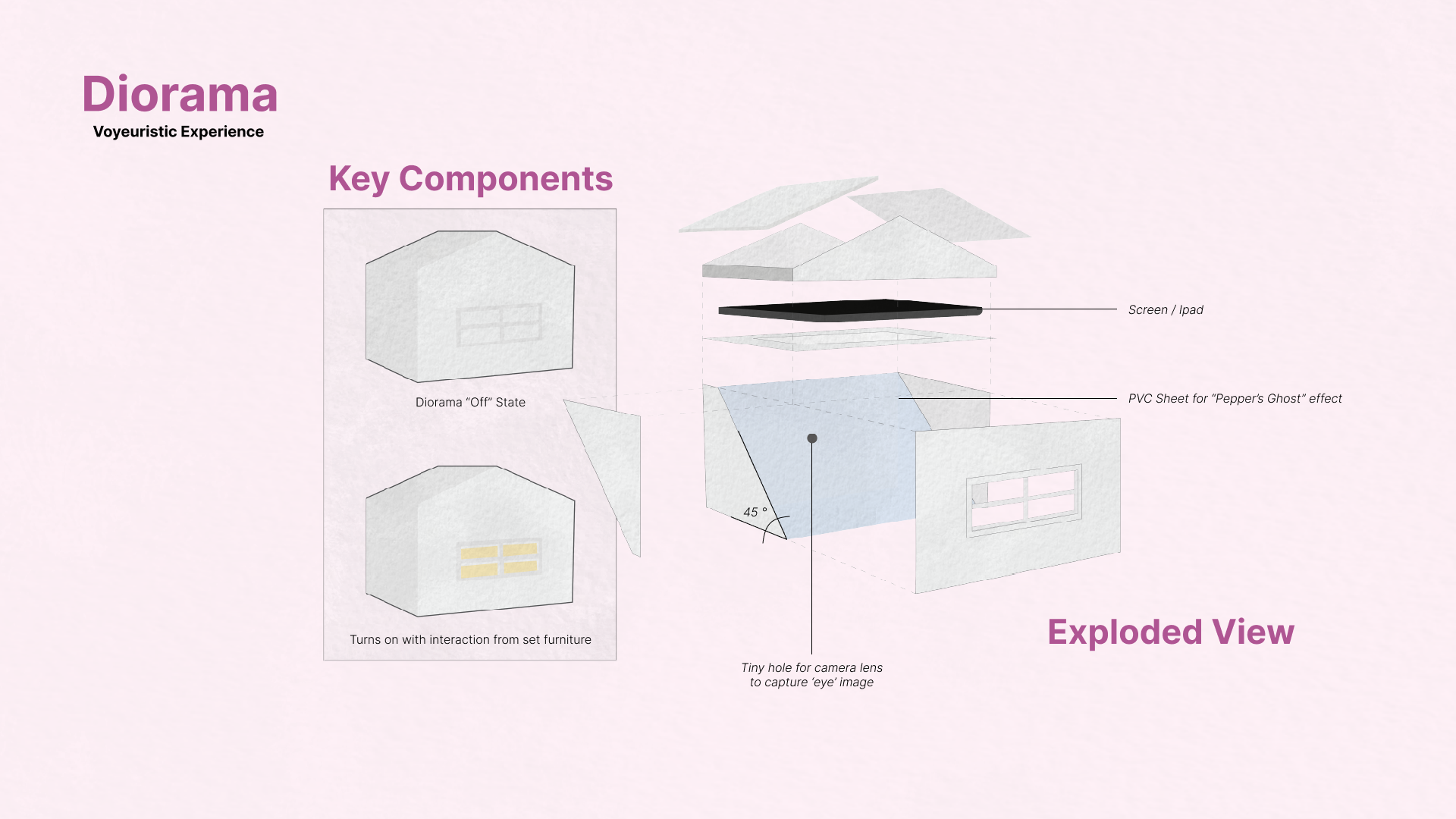
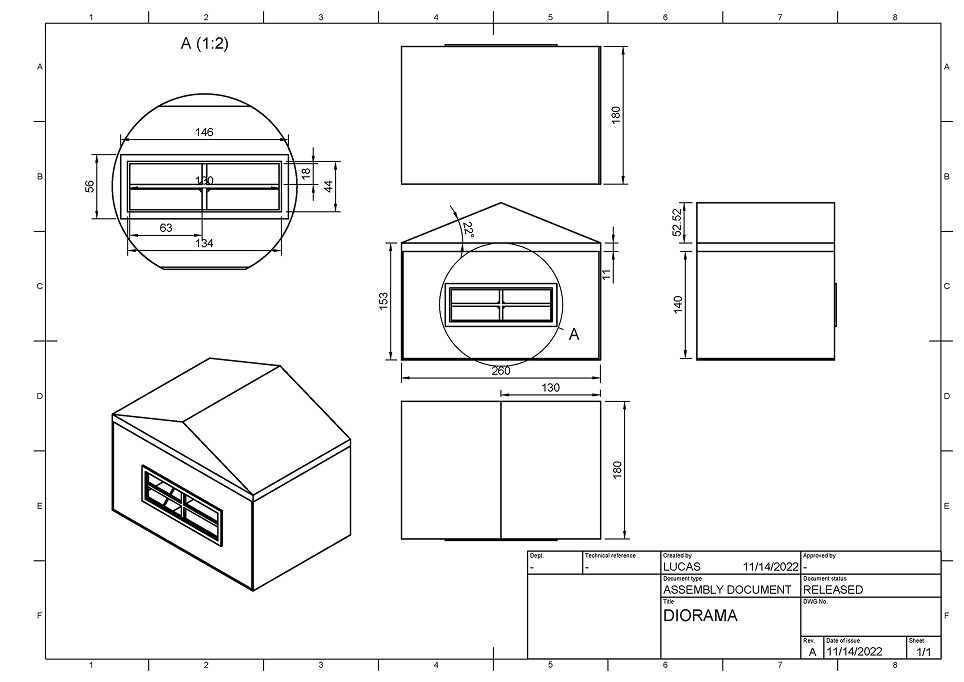
We constructed the diorama from laser-cut white acrylic sheets, assembling them to resemble a domestic home. We intended to make the set interactive, so the diorama comes to life when the furniture is engaged. To achieve the Pepper’s Ghost effect, which adds realism to the exhibition, we projected light onto a slanted PVC surface inside the diorama. This creates a holographic 3D illusion for peeking viewers, transforming the space into a vivid, immersive experience.
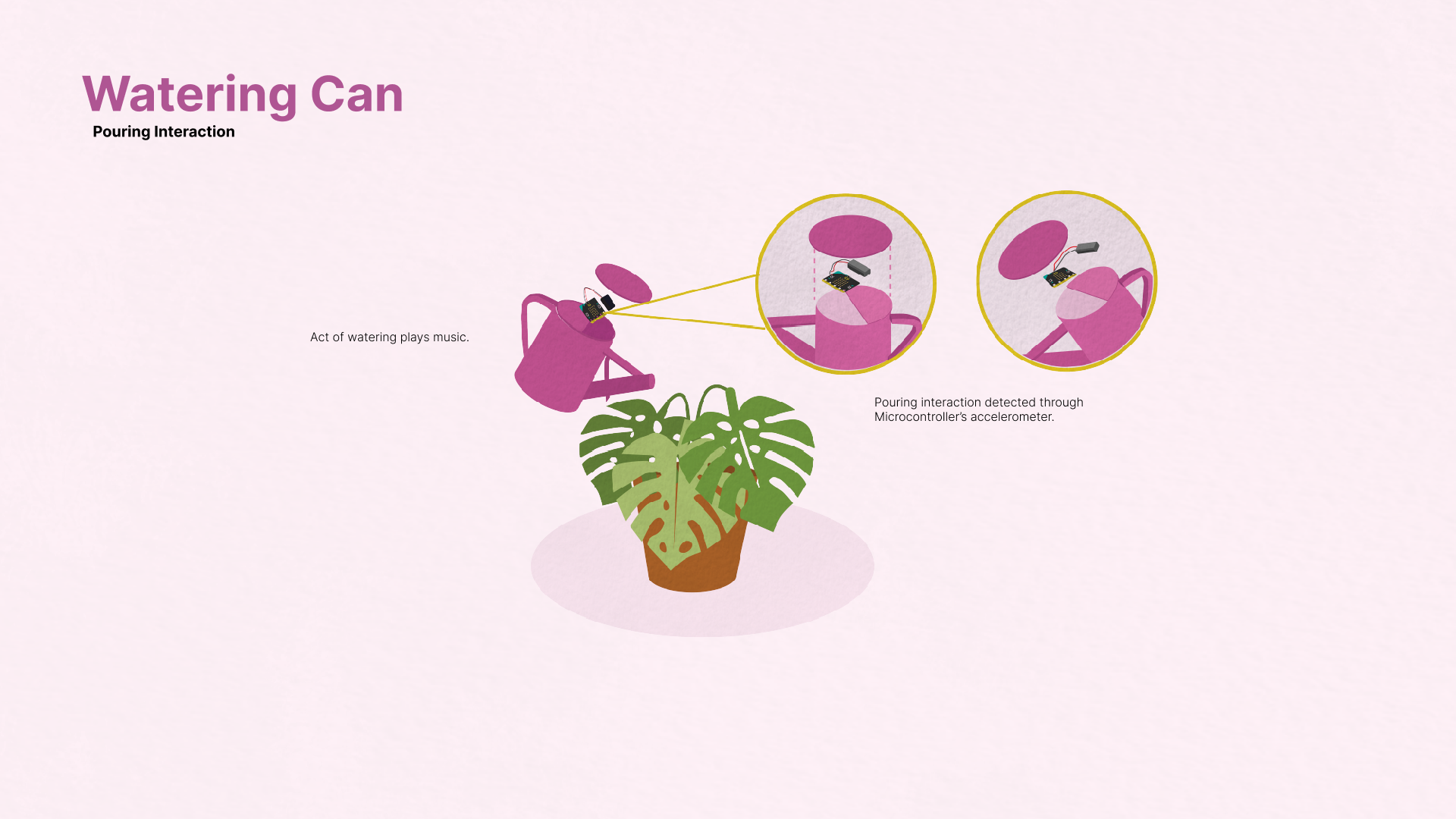
Interactive Furniture Elements
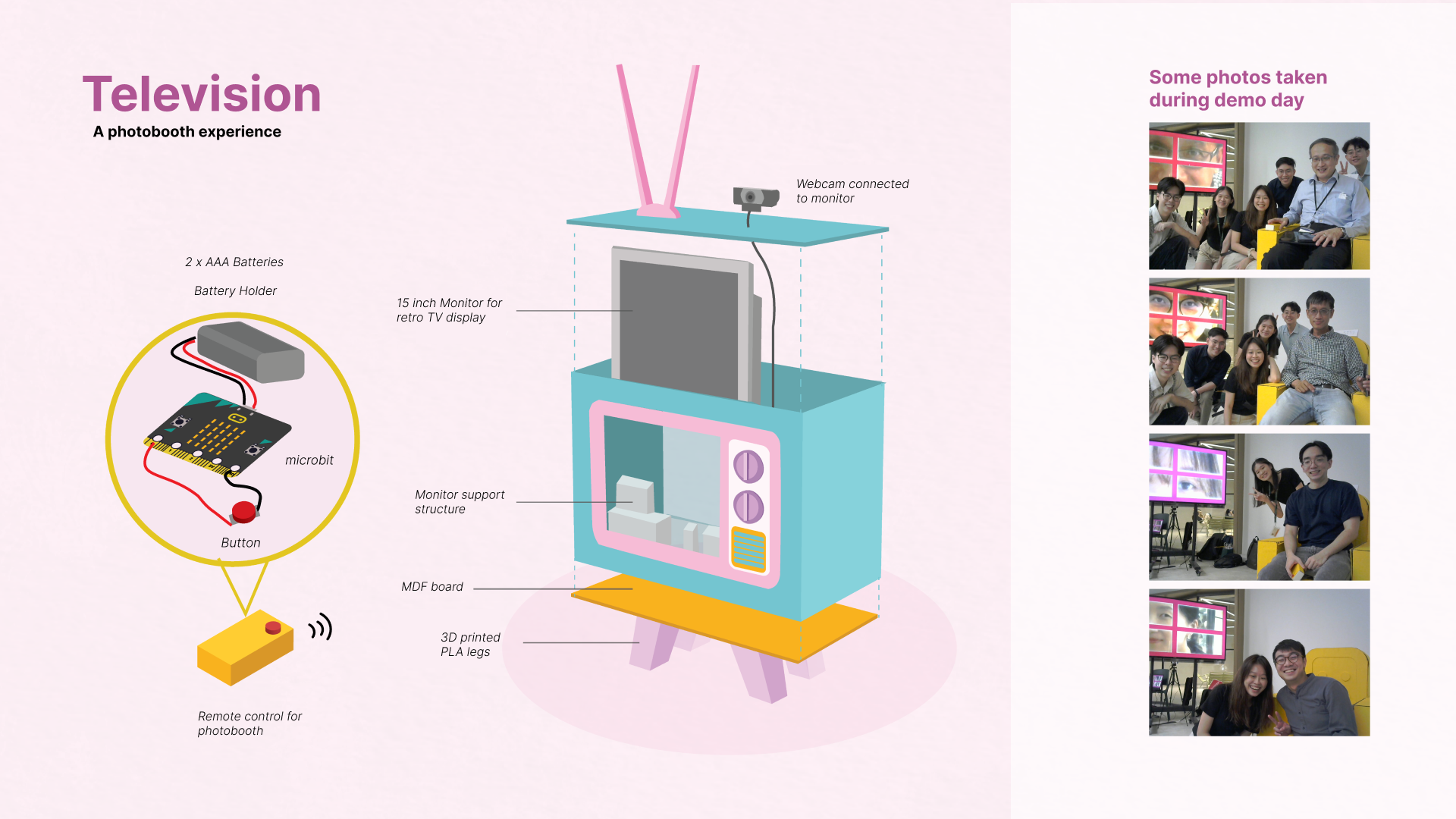
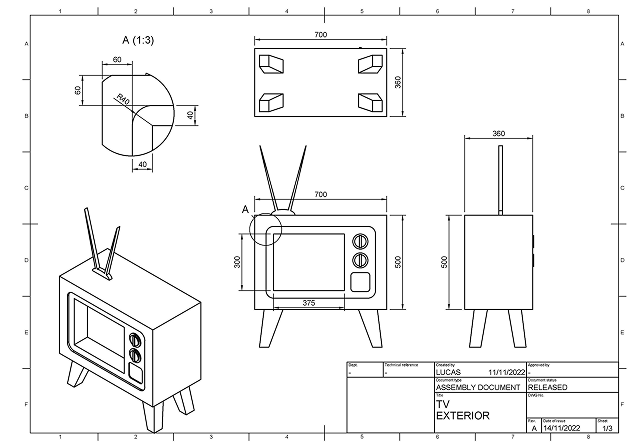
In the exhibition space, we repurposed Cheryl Teo’s television into a mini photobooth, inviting visitors to capture favourite moments with friends or partners as keepsakes. To make the interaction effortless, we connected a Micro:bit microcontroller via Bluetooth to a MacBook to activate the photobooth at the push of a button, ensuring the experience feels intuitive and seamless.
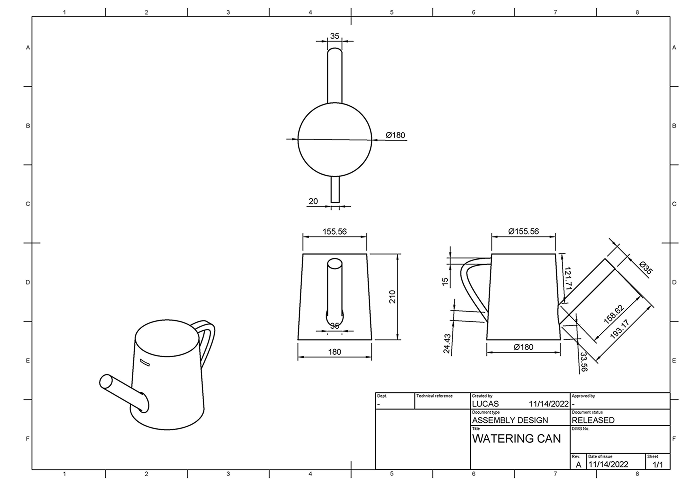
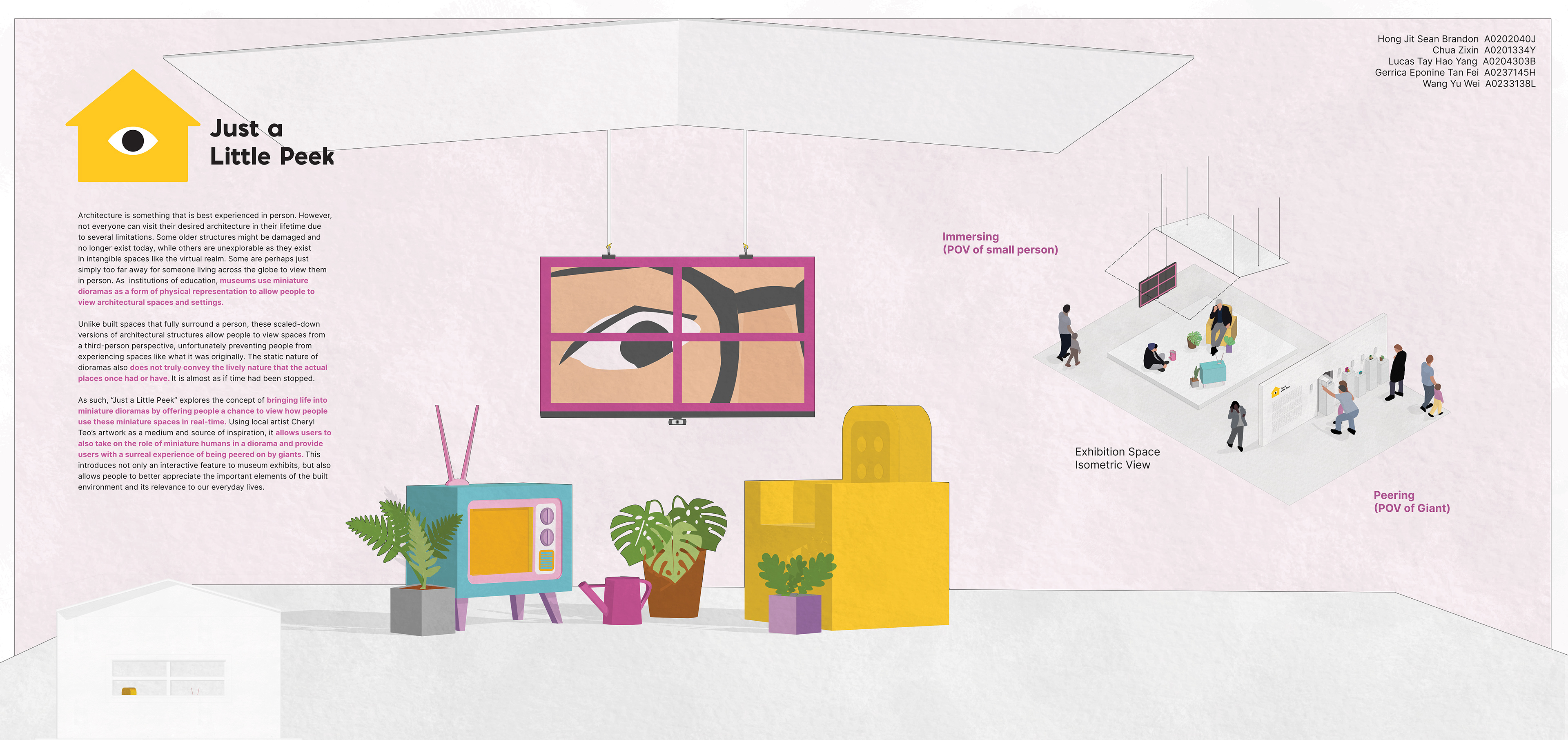
Architectural Presentation Boards
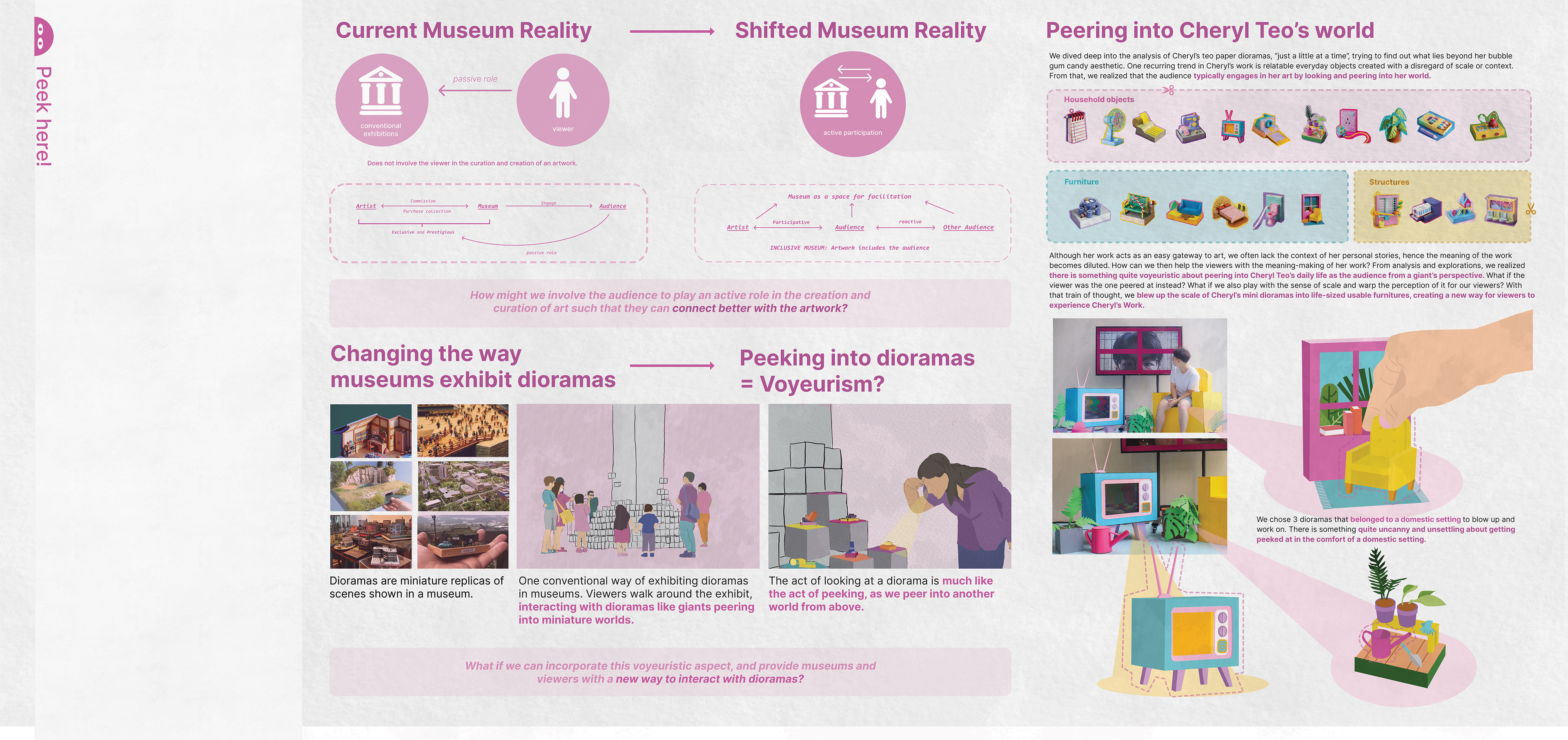
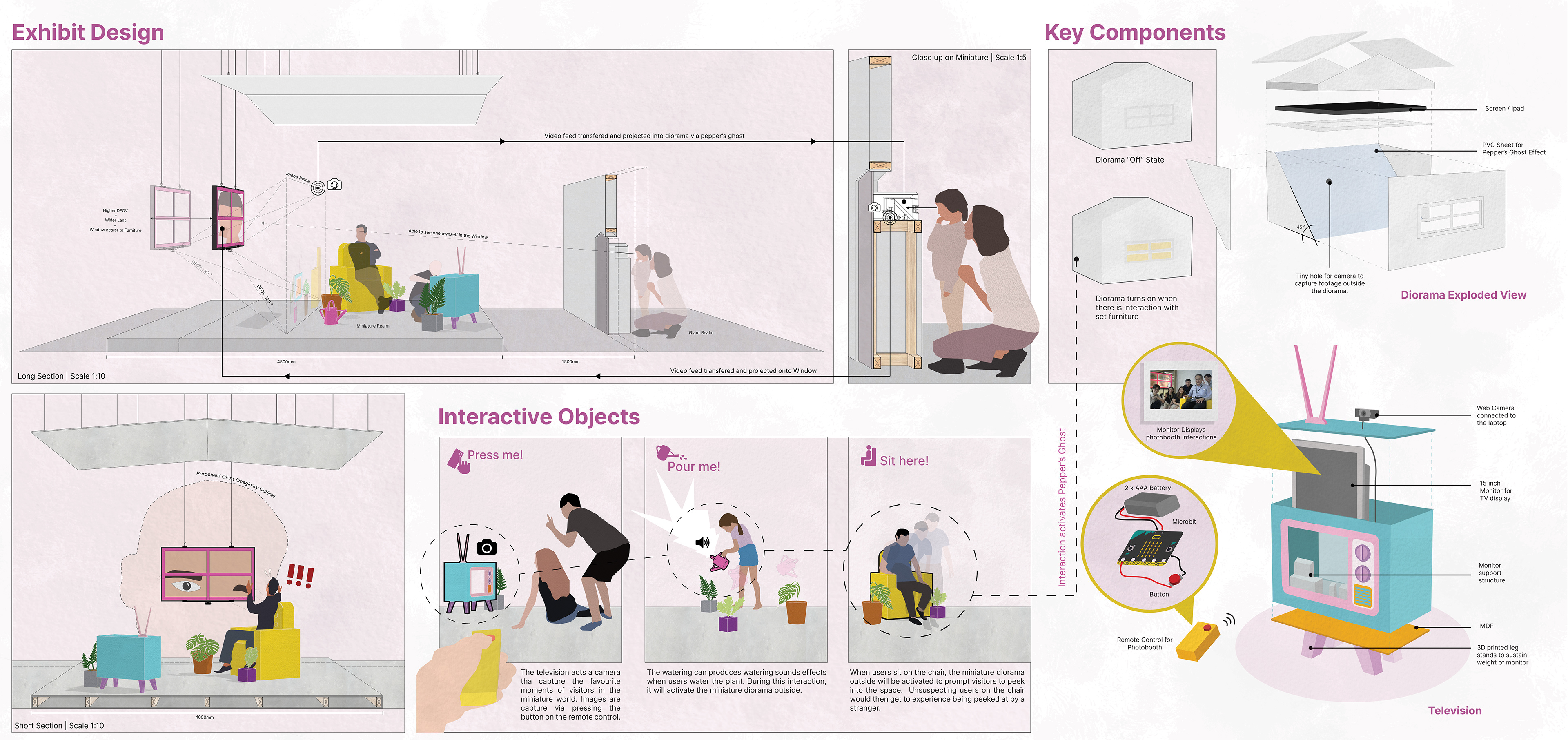
Created by the talented and brilliant Brandon Hong, the presentation boards were too well-made not to showcase. They capture “Just a Little Peek” through an architectural lens, highlighting the project’s spatial and design aspects.
Acknowledgements
This project was inspired by the work of Cheryl Teo, whose artistry provided the medium through which "Just a Little Peek" was realised. My sincere thanks go to my mentors Prof. Yen Ching Chiuan, Prof. Thomas Kong, Prof. Clement Zheng, Prof. Khoo Eng Tat, and Singapore Art Museum representative, Dr Lim Chye Hong, for their guidance and expertise.
Finally, heartfelt thanks to my incredibly amazing & dedicated teammates: Brandon Hong, Chua Zixin, Eponine Tan and Wang Yu Wei, whose collaboration made this insane museum experience possible.
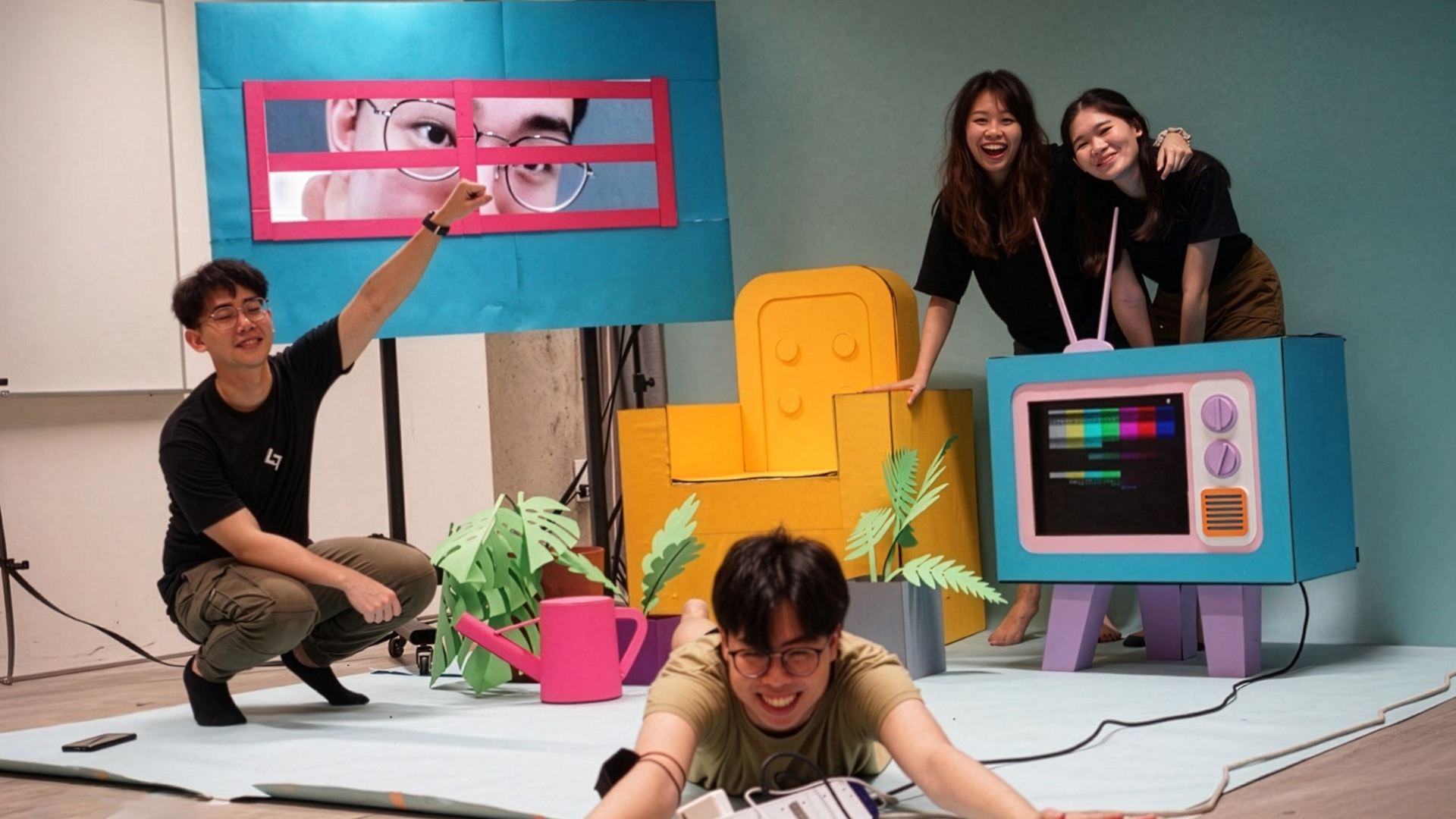
Although "Just a Little Peek" did not advance to a full exhibition format, it was the most enjoyable and meaningful project I’ve worked on, thanks to the commitment of my teammates and mentors. It became the spark that awakened my passion for design and set the foundation for many future projects.
To read up on the complete project documentation, which I highly recommend, please visit: https://drive.google.com/file/d/1NYCwHHSgRK0PdM30TrJXUGA-pfrH5iUT/view?usp=sharing
Additionally, discover more about Cheryl Teo’s work at https://www.lulopaperstudio.com/